Net Galley

Net Galley
Unless noted otherwise, the books reviewed here were provided by Net Galley.

NetGalley Challenge 2016

Tuesday, March 29, 2016

Future Arctic


“Future Arctic” by Edward Struzik, excellent on its own, is also a good complementary read to a book like Kennedy Warne’s “Let Them Eat Shrimp.” Both are about “underdog” ecosystems, one cold, the other quite warm, both stressed by climate change, vulnerable to exploitation of their respective resources, and, as is sadly often the case, the people living there are marginalized by outside interests. Struzik presents a wide range of the challenges the Arctic is already facing, and what we need to be thinking about when planning for what lies ahead. Much is unknown about this part of the globe, and predicting how climate change will shape it, and the rest of the world as a result, is far from easy. However, some of the best science being conducted is helping us prepare, and when made as clear as it is in this book, there is no reason to not take seriously the knowledge and modeling that can help us prevent or minimize the effects of future disasters.

Friday, March 25, 2016

What Happened, Miss Simone?


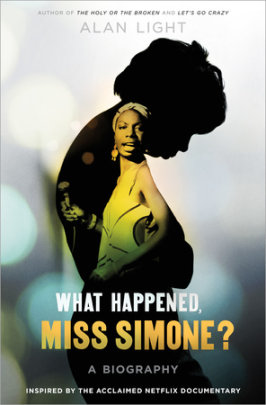
What do you know about Nina Simone? For my admiration of her and her music, I didn’t know all that much, and thought a book like this would be informative. Yes, this is a beginning to end biography, but feels like a series of events strung together, without any deep analysis. “What Happened, Miss Simone?” covers her tumultuous life, if brushing lightly over some heavy, serious incidents. I think this is a fair depiction of the woman, not entirely sympathetic for giving so much attention to her weaknesses, but we can see she was a strong person, and a true and original artist.

Monday, March 21, 2016

Why I read works in translation

I always wanted to know at least one other language, and since many of the closest countries are Spanish-speaking, like many neighbors here too, that language was a practical choice. One of my teachers said that the best way to learn a language is to read as much as possible, especially books, which contain every kind of word formation. Reading a book translated from English to Spanish helps me learn the latter, and reveals where changes were made. When I read a book translated to English, I have fun imagining how the original might have been written, and what would have had to stray from directness. This reciprocation also deepens my understanding of the mechanics of English. The voices of certain translators have sometimes pleased me as much as the authors themselves. After all, it is the translator’s words I am reading the story through.

Practicing Spanish is not the only reason. Why stop there? Even if I can’t learn a new language from reading one book, there is a rewarding experience of seeing the same processes at work, and more importantly, learning about different parts of the world, from people who have lived different experiences. Even works by English-speaking authors, especially from countries like England, can provide positive challenges. The importance of translation extends to nonfiction: the science and journalism communities are now global. There is a world of writing to be enjoyed, and translation is the key to making that available to more readers.

Note: I wrote this as a brief essay, limited to under 250 words. There is a lot more I could say, and would be open to starting a discussion on the topic.

Sunday, March 20, 2016

Dark Money


I read and review environmental books, and rarely read books about solely about politics. However, the biggest challenges and resistance to ameliorating environmental issues, especially climate change, come from one of the two major political parties in the United States, and an overwhelming amount of their campaign money be traced to fossil fuel industries and ultra-wealthy individuals like brothers Charles Koch and David Koch. “Dark Money,” then, is very much about the natural environment, but the whole political environment as well. When I started reading, I was highlighting almost every sentence, there was so much I wanted to talk about – but I was still in the introduction! After the first chapter, I scaled back, and hope I haven’t used too many direct quotes, and succeeded to rephrase other things. Jane Mayer wrote an article for The New Yorker in August 2010, a precursor to “Dark Money” in a way, but with equal attention given to the “Covert Operations” on the left as well. She was threatened with a smear – not personal, as no “dirt” could be found, but made-up claims of plagiarism that were easily disproven. The Kochs, apparently unavailable for comment, wouldn’t answer whether they were behind this. Credit goes to Mayer for this excellent work, and I encourage you to read her book for the full story.

Sunday, March 6, 2016

The Imitation Game


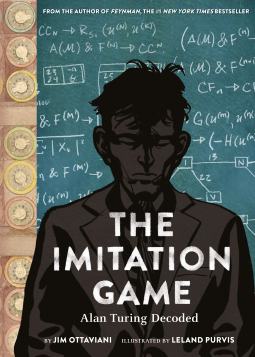
Even after reading the massive biography by Andrew Hodges, and seeing the movie “The Imitation Game,” I am still eager to learn more about the life and work of Alan Turing. “The Imitation Game: Alan Turing Decoded” is a graphic novel (biography) somewhere between those two, and continues to tell his story in an entertaining and informative manner.  This medium, too, is one I am growing very fond of, for its creativity and ease of presentation, in a series of frames like comics, its ability to demonstrate in ways that written text alone cannot. So, do we need more biographies of this man? Yes, and “The Imitation Game” is one of them.

Sunday, February 21, 2016

The Road to Little Dribbling


For risk of sounding like a Dust Bowl trek, this book might be better called “The Road to Cape Wrath.” Little Dribbling could be made up for all we learn about it, which is to say, nothing. Bill Bryson drew a line across a map of the British isle, the “Bryson Line,” which he “discovered.” Starting in Bognor Regis and ending at Cape Wrath, this appears to be the greatest distance in Britain, not from Land’s End to John o’Groats, as his citizenship exam would have you believe. A look at the map (perhaps more useful in print than e-book) and its labeled places shows he spends more time in the south and southwest. So often in books the end is given fewer pages, and here Scotland is reduced to the last chapter. However, I must say that really, I did enjoy this book. For all the insanity in the world, Bryson makes thing a little more bearable, and laughable.

Monday, February 15, 2016

Let Them Eat Shrimp


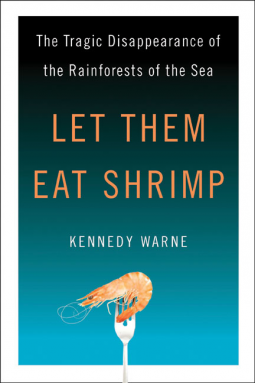
The title aside, “Let Them Eat Shrimp” by Kennedy Warne is about mangrove ecosystems and the threats facing them. While not an exhaustive natural history of the mangrove trees, and saying very little about the shrimp themselves, this is an important, big picture of the role mangroves play in protecting our world. I was reminded, though not thematically, of “The Underground Girls of Kabul” for the excellent journalism investigating and reporting this subject. The author, traveling, is part of the story but only as one human element – the book is not about him. Nor is this the typical depressing read on the subject of environmentalism (or human rights). This is a report of how we benefit with mangroves in mutuality, not just the consequences of their destruction but some of the solutions for improving their outlook.

Sunday, February 7, 2016

Shaler's Fish


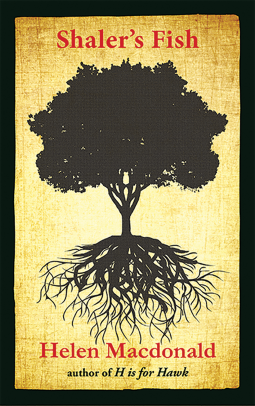
Despite the title, there is no specific mention of Shaler’s fish – which was a real fish – following the introductory quote. The sentiment, however, runs through these poems. That is, studying the subject at hand, be it a fish in a pan or a book on a stand. Agassiz’s lesson is carried out here, in full explorations of natural science and everyday life itself.

Saturday, February 6, 2016

Northern Goshawk, The Gray Ghost


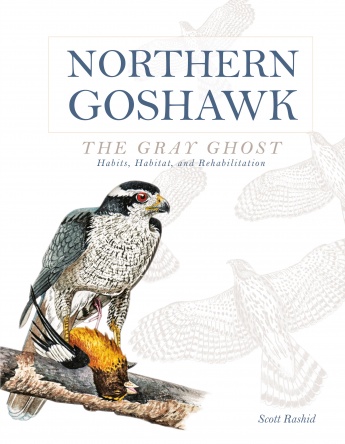
Almost a year ago, I was reading T.H. White’s “The Goshawk” followed by Helen Macdonald’s equally excellent “H is for Hawk.” At the time, I wouldn’t have guessed I’d be reading a third book about this great creature, but I am happy to say that I did. Whereas the two books I read last year were more about the goshawk's role in falconry, this is a study of the wild bird in its own habitat. I didn't realize there are so many species of goshawk, in the Accipiter genus, in the northern parts of the world. In my opinion, this might be the most beautiful hawk (sorry, all other hawks). While he doesn’t explain the name “Gray Ghost,” I find it fitting. This bird, one I have never seen, does seem almost mythical, a force of nature, living in northern forests. Its sound, as described in this book, is eerie (a sample is here: https://www.allaboutbirds.org/guide/Northern_Goshawk/sounds); the author uses the word “cackle.” Those glowing red eyes and smoky, shadowy plumage of charcoal and stone, and their association with Arthurian times, add to my awed perception.

Thursday, February 4, 2016

Vinegar Girl


Back in high school, I read “Dinner at the Homesick Restaurant” and loved it. I don’t know why it took me so long to read something else by Anne Tyler. “Vinegar Girl” is her re-telling of Shakespeare’s “The Taming of the Shrew,” set in Baltimore like her other books. A comedy, this book had me laughing, sometimes out loud, on every page, with a few discomfiting moments mixed in.