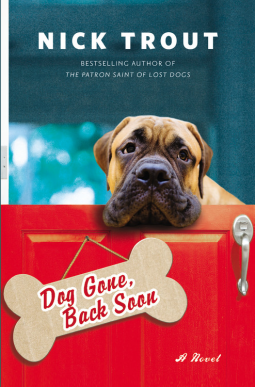
When you need something light and entertaining to read, a
book like “Dog Gone, Back Soon” is sure to do the trick. Set in a small town in
Vermont, the story of veterinarian Cyrus Mills returning to take over his late
father’s practice fits the bill – funny and a good time. There are a lot of subplots
that get the narrator into more and more of a pickle. There’s the move to the
cold winter from the South, which can be
enough for some people as-is; add to that the challenge of making a second
date, a tight budget, a ridiculous and unnecessary threat of competition from
the next-town-over’s vet practice, and of course all of the patients he takes
on.
I am a scientist and early career biologist. I am also an active reader, and am curious about almost everything. Of particular interest to me are natural histories and environmental conservation, though I also enjoy a lot of contemporary and classic fiction. I have an interest in Latin American and Spanish culture, and enjoy practicing Spanish by reading books in that language. In addition, I am a musician, and especially love jazz. @mattc3388 on Instagram
Tuesday, May 31, 2016
Friday, May 27, 2016
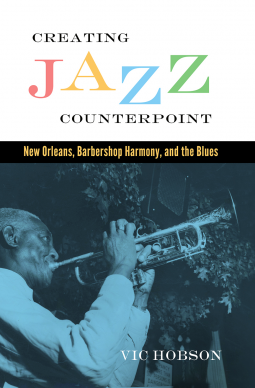
Creating Jazz Counterpoint
I love jazz. If you know me, you probably already knew that.
I did not, however, know much about the origins of this music, in terms of the
first musicians and early songs. “Creating Jazz Counterpoint” fills in some
gaps in this knowledge through excellent research and effective communication.
Although more of an academic book, Vic Hobson’s writing is clear and concise,
and objectively reconstructs what may have happened, based on the sources
available.
Wednesday, May 25, 2016
The Best Gig in Town
Following Edward Allan Faine’s “Ellington at the White House 1969,” “The Best Gig in Town” details the biggest jazz events held at the White
House during the Nixon administration. Nixon is not the first president that
would come to mind for making jazz a regular feature there, but he hosted several
significant events for this genre. Relatively moderate by today’s standards,
Nixon presented artists with political affiliations from both sides, always
seeking political gain. Because these events had to be planned as carefully as
possible, they are well-documented, allowing the author to tell about the lead-ups,
the unfolding, and the reaction that followed, sometimes lasting years, as in
the Ellington case.
Sunday, May 22, 2016
The Evolution of Mann
Herbie Solomon, known as Herbie Mann, made room for the
flute as a lead instrument in jazz, and went to the sources of world music to offer
a taste of many cultures. Herbie Mann could play bebop with the best of them,
but was interested in exploring other subgenres of jazz, and music from all
over the world. The flautist went through phases, notably Brazilian bossa nova,
and Afro-Cuban before that, both of those before Middle Eastern, Japanese, R&B,
and, infamously, disco, among others.
Monday, May 16, 2016
Albina and the Dog-Men
Having read Alejandro Jodorowsky’s “Where the Bird Sings Best,” I was prepared for the weirdness in his second translated novel, “Albina and the Dog-Men.” Weirdness aside, inside, this is a good, entertaining story, a
journey, like any good road trip. Quite often I was reminded of Indiana Jones
looking for the Holy Grail, and even the Temple of Doom. The three main characters
are named for their characteristics, but see transformations that bring out
their true names. Crabby, who walks hunched over like a crab, rejected her
given male name of Isaac, and later turns this into Isabella. She finds and
names amnesiac Albina in the first chapter, and they run from the authorities
together, hitting the road. Just when they need help, they join up with the hat
maker, Amado Dellarosa, making for a strange kind of love triangle.
Saturday, May 14, 2016
Conversations in Jazz
Ralph J. Gleason was a co-founder of “Rolling Stone”
magazine, but was also very hip to the jazz scene. “Conversations in Jazz” is a
collection of interviews between this man and some of jazz’s greatest artists
(all happen to be men). This book very helpfully provides brief introductions
to the artists, not just their career highlights but what they were doing
around the time of the interview. Gleason seemed to know how to catch them at
interesting moments of transition, and mutual trust and respect brings out some
honest, open dialogue.
The Snow Queen | The Fir Tree
As
you get older, there comes a point when you look back at childhood stories and
see that there’s something not right about many of them. Hans Christian
Andersen’s tales are like this – there is something dark and deceptively
twisted. Since these particular two share a similar new publication, I am
reviewing them together. “The Snow Queen”: in which Gerda sets out to find her
lost best friend Kay, and “The Fir Tree”: in which a sentient fir tree gets
removed from its forest home and is introduced to fire. Rather than shortening
their summary, I will focus on some common elements and what sets the new
releases apart (the artwork).
Sunday, May 1, 2016
And After Many Days
Set in Nigeria, spanning the 20th century up to right about
now, “And After Many Days” is centered around events in the mid-1990s, shifting
very subtly back and forth in time. While not a whole lot happens in the first
half or so, things do pick up. This is still a very good book, told in the omniscience
of the Utu family, and youngest sibling Ajie in particular. His sister Bibi and oldest brother Paul, Ma and Bendic
(their father, Benedict) are also prominent; their driver Marcus and gateman Ismaila, and
neighbors, extended family, and work colleagues are all in and out of their
home doors, both in Port Harcourt and on vacation in Ogibah. Rewinding to the
childhood of the 90s is important, as a way of remembering Paul, before he
disappeared. Most of the book reads like memories, the way you remember every
small detail when something traumatic or significant happens. There are also
stories of family history before their time, as it was told to them. Ma is a
biology teacher, and Bendic, the only surviving of his siblings, is a lawyer,
respected and intellectual. He is also an older father, and has some health
concerns. Paul looked up to him, and Aije looked up to Paul. The siblings often
fight (as siblings do) and their parents’ discipline is informed, not
punishing. The Christian church is on the side, there when it suits
them, and they sometimes see Bible passages as if stories in their own lives. The
Utu children must choose which schools to attend, are often compared to other
kids their age, and witness tradition against modernity. The dialogue features
words from the country’s many different languages mixed in with the English.
Subscribe to:
Posts (Atom)