Net Galley

Net Galley
Unless noted otherwise, the books reviewed here were provided by Net Galley.

NetGalley Challenge 2016

Saturday, April 25, 2020

The Which Way Tree

Wanting to minimize the number of things I have to bring in the house, this is the right time to start reading all of the books I haven’t gotten to yet. I am so glad that I had this one, “The Which Way Tree” by Elizabeth Crook. While the “Tree” in the title and the painting on the cover probably first caught my attention, the comparisons to “True Grit” also drew my interest. An epistolary novel told mostly through the written testaments of a young Benjamin Shreve, per the order of a judge (who through these letters he befriends), he delivers much more than what he knows about a suspected criminal, making that shady character just one part of his and his half-sister’s story.

This book made me think of “Life of Pi” and even “The Jungle Book,” for the adventures with a large, wild cat. Though Samantha Shreve can only think of killing the panther that killed her mother and scarred her face, taking out an apex predator is not usually a good idea. However, this one behaves more like a domestic cat that should never be outside because it’s just killing animals for the sake of killing them, and terrorizing the people in the area. Everyone knows of this particular panther, too, because of its two missing toes, hacked off by Sam’s mother Juda. It turns out there is such a thing as a panther dog (at least in this book), which is equally single-minded in pursuing panthers, and the one that enters this story is a homely one to say the least. Benjamin’s writing has a voice that sounds so clear and true, not to mention likeable, sympathetic. I feel like I watched a movie, when I only read the book. A few particular things I liked were the descriptions of trees, and finding out what the titular which way tree means in this context. This also reflects the knowledge people needed to have in that time and place (Texas, end of the Civil War) about the natural world around them. Plus, the way Benjamin spelled Spanish words phonetically made me smile every time. I am again really glad to have received a copy of this through a Goodreads giveaway. If you are you are fortunate enough to have the means to read them, look for the ebook.

Friday, March 27, 2020

Protecting Pollinators

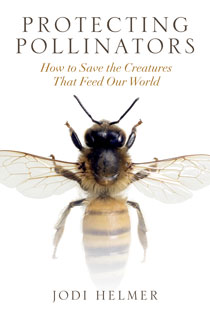
The coronavirus has changed the world in ways most of us were not expecting; I don’t need to further emphasize its importance and consequences, immediate and future. And yet, climate change continues, and all of those challenges remain. Among everything else tied to climate change, the conservation of pollinator species and the plants they are even more closely tied to also remain in flux. Protecting Pollinators, by Jodi Helmer, is a practical and readable book that covers the issues pollinators face, why they’re important, and what we can do. She explains that they are more than just honeybees and almonds, Monarch butterflies and milkweed, which get the same proportion of attention here as elsewhere. Native bees and other insects, along with hummingbirds and bats are also given their due. Helmer explains, in multiple ways, why native plants are the best choice, and why pesticides can be so detrimental, putting them in context from at-home to larger agricultural scales. The last chapter especially goes into citizen science, and may be the most encouraging portion for readers. While the book is not so much about food, it doesn’t need to be. This book is a concise review of the small animals that work for us, without which we wouldn’t have any food. When these issues are properly taken into consideration, we can hope for better health of the systems that produce our food. And even from home, there are ways we citizens can contribute to conservation efforts.

Thanks go to IslandPress for providing this book in exchange for a review.

Tuesday, January 28, 2020

The Casket of Time

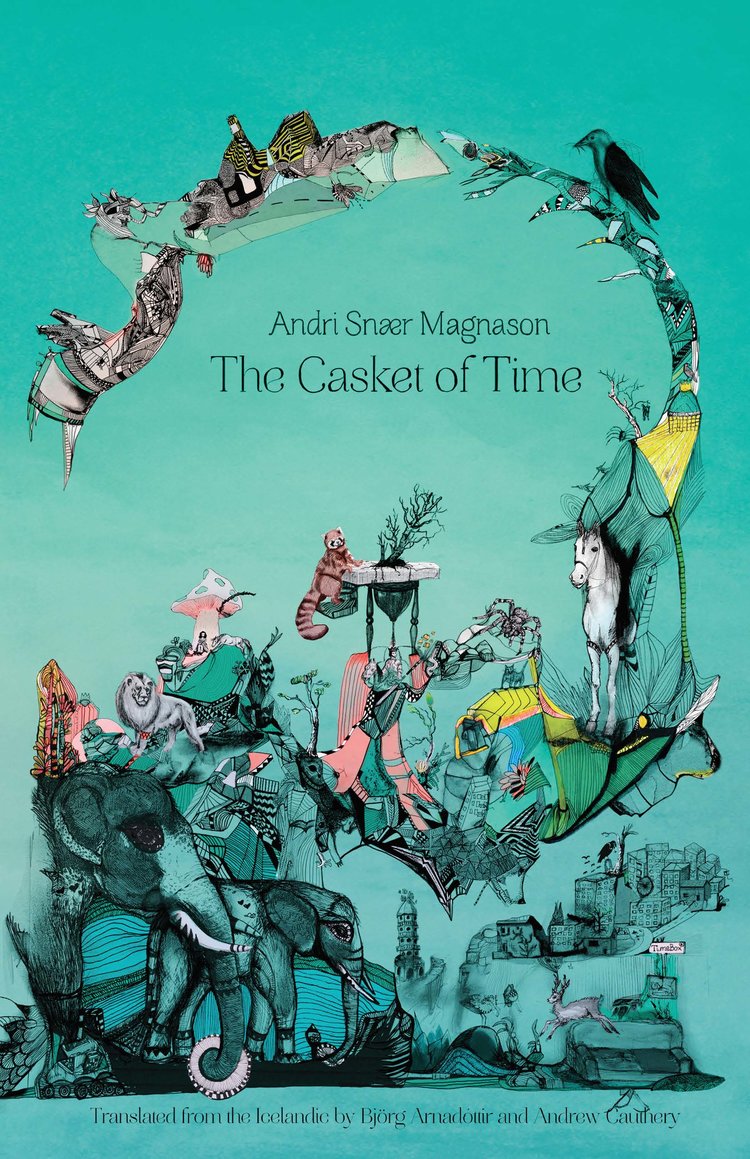
I really enjoyed The Casket of Time, and found it to be a stirring, thought-provoking book. Sigrun’s leap forward in time is a stunning example, the first of several, of the author’s brilliant imagination, with the simple concept in a why-hasn’t-anyone-thought-of-that turn. While the TimeBoxes themselves, made of spider silk, are hard to picture, the rest of the writing is clear as a movie. Even the absurdity – the magical kingdoms and creatures – all unfold in a realistic way.

The premise of people sealing themselves off from time, until any time later, is a powerful reflection of humans’ inability to take proper leadership and act responsibly on issues that can’t out-wait us. The characters here are likable, and the story within the story, which occupies most of the pages, ties everything together with much satisfaction. Not judging a book by its cover, I do admire this one’s artwork, both the colors and the sketches that suggest the contents within. While reading the book gave me an ominous feeling, having time to reflect later has left me with a deeper takeaway.

Review copy provided courtesy of Restless Books

Sunday, November 20, 2016

Upstream

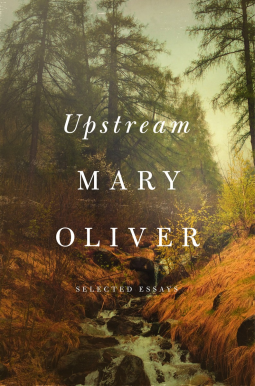
I am a little delayed in finishing this review, but in this crazy and cruel world, Mary Oliver’s writing can help one in some small way. In “Upstream” her essays read like poems, her poems are like essays. More than a sprinkling of pretty words, her thoughts here are longer, the analyses deeper. This collection feels like the use of a camera lens, beginning out of focus, then fitting things together in clarity, and blurry again before reversing and readjusting. There is a sweet spot somewhere in there; you will find it if you look. Having my own familiarity with Cape Cod, I enjoyed reading about its landscapes, the fauna including some pets, and a very brief but kind cultural history of Provincetown, all the way at the end of the arm. Found midstream are a few short life stories of writers important to Oliver: a sympathetic biography of Ralph Waldo, a visual portrait of Edgar Allan Poe, and some words on Whitman and Wordsworth. One of the most memorable descriptions, however, was of snapping turtles eggs she collected, rather than letting a raccoon get to them, and how they felt and tasted, scrambled. I’ve been thinking about and doing a lot of photography lately, so like I said, where you choose to find focus, in photography and in reading, you can find whatever you’re looking for.

Saturday, October 29, 2016

Warp


Not at all related to “The Magicians,” Lev Grossman’s newly re-published novella “Warp” does have similar characters and voices. Hollis (full name Hollister?) Kessler is a lot like Quentin, but again, they live in different worlds. I call it a novella because it is a bit short to be a full novel. And, that said, the book had promise – a lot more could have happened, if it had been longer, or even extended into a series. It was more like a very long short story or a string of very short short stories. There is also a sub-text, which I did not read very much into. I interpreted this as being Hollis’s thoughts: the things he thought but did not say. Perhaps he was an aspiring writer, and those were some of the things he would have committed to paper, or if not practice writing in his head, the rest are memorable lines from pop culture (if that also includes sci-fi). Why the book is called “Warp,” then, isn’t really explained.

Saturday, October 22, 2016

The Invoice


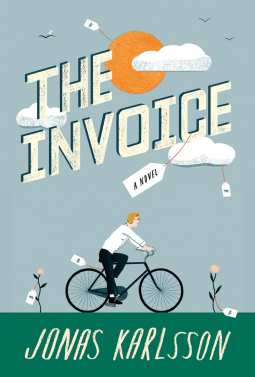
A little book you can read in an evening, “The Invoice” is charming and curious. Comparisons to Kafka are fitting, as our hero is rolled into an undertaking with little control over how to get out of it. The W.R.D. is in the process of a global redistribution of wealth, and every person is evaluated individually, to pay or receive their fair share. The exact methods are cryptic but reportedly very accurate. “Experienced happiness” is one metric brought up, and this is not a reflection of money or possessions, but experiences themselves. Our man, then, who makes the most of every situation and is content with his life, is invoiced for more than he could ever afford. Calling the number on a form, he talks with Maud, who after repeated calls becomes a lifeline in effect. The language author Jonas Karlsson employs starts off very simple, but as the story moves along, both the plot and the narration become more complex. A recommendation: as this book is set in the heat of summer, read then if possible, though at other times this will still feel good.

Note: I received a free copy of this title through BloggingForBooks in exchange for an honest review.

Sunday, October 9, 2016

Mushrooms of the Redwood Coast


Everyone I’ve told about this book has said “that sounds very specific,” and indeed this is a niche book. I don’t live near the redwood coast, but rather on the other side of the country, so this isn’t something I’d be consulting any time soon, if ever. But why I wanted to check out this book, besides being interested in field guides and all things natural history, was that there might be some overlap with mushrooms in the northeast. Certainly there are at least some fungi that are so widely distributed one could find them on opposite coasts. The diversity of fungi is overwhelming, so it’s hard to know where to start. I have a thought, though, that if you want to discover a new species – of any organism – the easiest place to look would be fungi. Then you can name what you find however you’d like. But you have to know what to look for, where to look, and make sure it hasn’t been described already. But back to the book.

Thursday, September 29, 2016

Donny Hathaway Live


I’m always sad when I ask people if they know Donny Hathaway’s music and they haven’t heard of him. So much about his biography is sad, but I don’t want to dwell on that. If his music is sad, it is also optimistic, and the messages are just as relevant today. Finally there is a book on this great musician for the world to read (there is some poetry out there, too, so this is really the first nonfiction). I always believe the best way to learn about music is to listen, but reading always helps you know what to listen for. In the 33 1/3 series, Emily J. Lordi chose to write about “Donny Hathaway Live” to represent this artist.

Friday, September 23, 2016

Cuba!

Here is a book that could be worth getting just for the photography, but also a book about food and culture that happens to have recipes. The recipes in Cuba! come from the three authors’ trips to the island, what they learned there, and how they can be made here. Unless you’re a real foodie with a decent budget, most people would realistically find one or a few recipes here to actually make; although, because of the simplicity of the ingredients, there is a higher percentage of “doable” recipes than in other niche cookbooks. Whether you make one, none, or many of these recipes, having this kind of book lets us learn more about cuisine and culture that we might not otherwise know much about, and is colorful joy to look through.

Monday, September 19, 2016

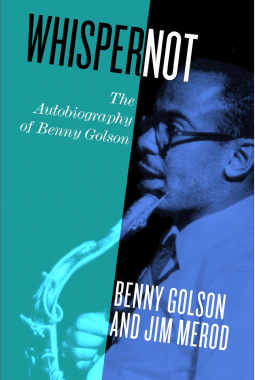
Whisper Not


Benny Golson is one of the best composers in the history of jazz, so it’s not surprising that his autobiography is also one of the best in writing. Credit goes too to Golson’s friend Jim Merod, for making this into a very entertaining book, and a master class in jazz. I didn’t know much about Benny Golson, but had the understanding that he is a good person respected by everyone who has worked with him, and the tenor saxophonist who penned some unique tunes in the jazz repertoire.