Net Galley

Net Galley
Unless noted otherwise, the books reviewed here were provided by Net Galley.

NetGalley Challenge 2016

Sunday, May 1, 2016

And After Many Days


Set in Nigeria, spanning the 20th century up to right about now, “And After Many Days” is centered around events in the mid-1990s, shifting very subtly back and forth in time. While not a whole lot happens in the first half or so, things do pick up. This is still a very good book, told in the omniscience of the Utu family, and youngest sibling Ajie in particular. His sister Bibi and oldest brother Paul, Ma and Bendic (their father, Benedict) are also prominent;  their driver Marcus and gateman Ismaila, and neighbors, extended family, and work colleagues are all in and out of their home doors, both in Port Harcourt and on vacation in Ogibah. Rewinding to the childhood of the 90s is important, as a way of remembering Paul, before he disappeared. Most of the book reads like memories, the way you remember every small detail when something traumatic or significant happens. There are also stories of family history before their time, as it was told to them. Ma is a biology teacher, and Bendic, the only surviving of his siblings, is a lawyer, respected and intellectual. He is also an older father, and has some health concerns. Paul looked up to him, and Aije looked up to Paul. The siblings often fight (as siblings do) and their parents’ discipline is informed, not punishing. The Christian church is on the side, there when it suits them, and they sometimes see Bible passages as if stories in their own lives. The Utu children must choose which schools to attend, are often compared to other kids their age, and witness tradition against modernity. The dialogue features words from the country’s many different languages mixed in with the English.

Saturday, April 16, 2016

God Is Round


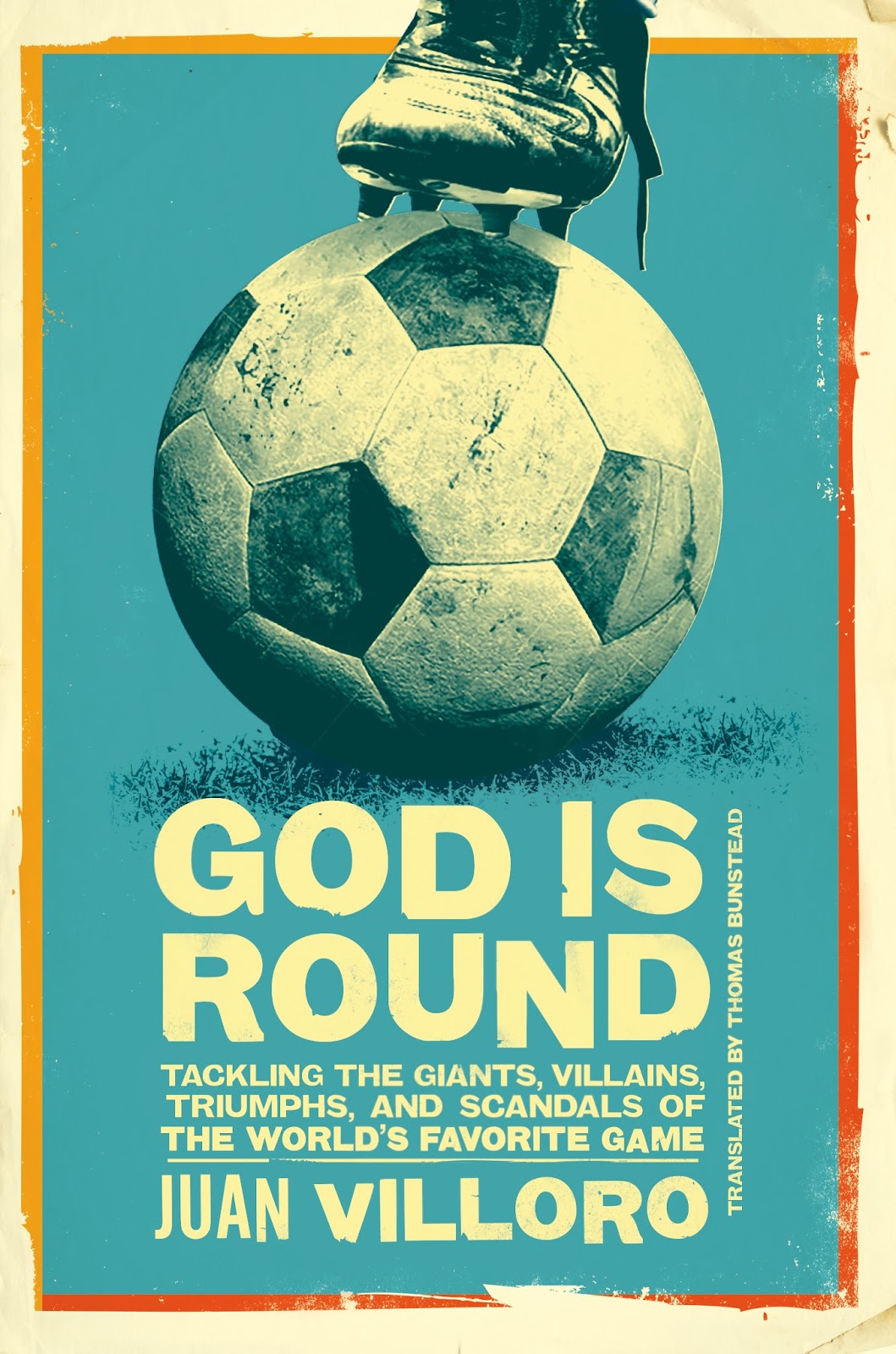
With a title like “God Is Round,” I was drawn to this contagious level of devotion, for a subject as uniting as soccer. I will refer to the sport as both soccer and football, the other football having no place here. This book name comes from a true love for the game, and its author, Juan Villoro, is an encyclopedia of the sport – and also of literature. He opens with a bit on an Uruguayan writer who worked first in his country’s national football stadium, and he throws in references to global literature and other popular culture – some of which I don’t get. Nor do I know all of the players – but even a non-follower must recognize more of these legends than they might think. And, he does not give explanations of the rules, only anecdotes of memorable plays or behaviors – so you have to be ‘in the know’ to get some things. I am not a “fan,” but I appreciate the simplicity of the game, its intuitiveness and universality. Villoro’s writing makes me want to both read about and watch (maybe even play) more football.

Sunday, April 3, 2016

The Illustrated Compendium of Amazing Animal Facts


“The Illustrated Compendium of Amazing Animal Facts” by Maja Säfström is a funny little book. Like Matt Sewell’s “Owls,” also published by Ten Speed Press, it is quirky, nice to look at, and actually informative of some of nature’s stranger evolutions. This book is even better suited for younger readers, as the facts can be read within a short attention span. There is a pleasant ridged texture on the cover, but the cool metallic blue there is the only color in the book – all the pages are black and white. The drawings are even and controlled, with enough accuracy for unmistakable identification, but with a signature artistic freedom, including some speech bubbles from a few animals. They range from ants to whales, with one to several facts. Sometimes they’re pictured by themselves; other times they are shown with some of their habitat. Each has two facing pages devoted to it, seen all in one view. There are a few trends across species, such as the ability or inability to move backwards; what they are called in a group; and eating, sleeping and even excreting habits. Many of the facts you may have heard before, but maybe those younger readers haven’t yet. I’d like to think these are all indeed facts, and not any urban legends. 10 birds, 26 mammals, 3 fishes, 11 invertebrates, and 5 reptiles or amphibians make up this bestiary, yet they do not appear to be in any taxonomic or alphabetic order. These animals are familiar favorites, from the domestic to wild, common to rare, and all seem happy to be part of this collection. This is a fun read, a book to flip through and another way to learn about the diversity of life.

Note: I received a free copy of this title through BloggingForBooks in exchange for an honest review.

Saturday, April 2, 2016

Never Cry Wolf


I was excited to see this classic on NetGalley, first published in 1963 but now available as an ebook. I hadn’t read anything by Farley Mowat before, and I could immediately see, when I began reading “Never Cry Wolf,” that one reason he is celebrated is the rich vocabulary and story-telling he entertained with. I found him reminiscent of Bill Bryson, but even more over-the-top. He seemed to almost go out of his way to never use the same word more than necessary, for full expressiveness, and has a slightly more subtle satire. Comparisons can also be made with Edward Abbey in “Desert Solitaire”: both were alone in a barren place, becoming part of the landscape, working for government agencies, with their own interpretations of meeting their requirements.

Tuesday, March 29, 2016

Future Arctic


“Future Arctic” by Edward Struzik, excellent on its own, is also a good complementary read to a book like Kennedy Warne’s “Let Them Eat Shrimp.” Both are about “underdog” ecosystems, one cold, the other quite warm, both stressed by climate change, vulnerable to exploitation of their respective resources, and, as is sadly often the case, the people living there are marginalized by outside interests. Struzik presents a wide range of the challenges the Arctic is already facing, and what we need to be thinking about when planning for what lies ahead. Much is unknown about this part of the globe, and predicting how climate change will shape it, and the rest of the world as a result, is far from easy. However, some of the best science being conducted is helping us prepare, and when made as clear as it is in this book, there is no reason to not take seriously the knowledge and modeling that can help us prevent or minimize the effects of future disasters.

Friday, March 25, 2016

What Happened, Miss Simone?


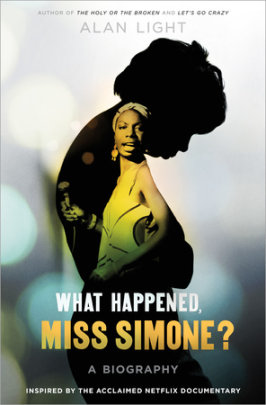
What do you know about Nina Simone? For my admiration of her and her music, I didn’t know all that much, and thought a book like this would be informative. Yes, this is a beginning to end biography, but feels like a series of events strung together, without any deep analysis. “What Happened, Miss Simone?” covers her tumultuous life, if brushing lightly over some heavy, serious incidents. I think this is a fair depiction of the woman, not entirely sympathetic for giving so much attention to her weaknesses, but we can see she was a strong person, and a true and original artist.

Monday, March 21, 2016

Why I read works in translation

I always wanted to know at least one other language, and since many of the closest countries are Spanish-speaking, like many neighbors here too, that language was a practical choice. One of my teachers said that the best way to learn a language is to read as much as possible, especially books, which contain every kind of word formation. Reading a book translated from English to Spanish helps me learn the latter, and reveals where changes were made. When I read a book translated to English, I have fun imagining how the original might have been written, and what would have had to stray from directness. This reciprocation also deepens my understanding of the mechanics of English. The voices of certain translators have sometimes pleased me as much as the authors themselves. After all, it is the translator’s words I am reading the story through.

Practicing Spanish is not the only reason. Why stop there? Even if I can’t learn a new language from reading one book, there is a rewarding experience of seeing the same processes at work, and more importantly, learning about different parts of the world, from people who have lived different experiences. Even works by English-speaking authors, especially from countries like England, can provide positive challenges. The importance of translation extends to nonfiction: the science and journalism communities are now global. There is a world of writing to be enjoyed, and translation is the key to making that available to more readers.

Note: I wrote this as a brief essay, limited to under 250 words. There is a lot more I could say, and would be open to starting a discussion on the topic.

Sunday, March 20, 2016

Dark Money


I read and review environmental books, and rarely read books about solely about politics. However, the biggest challenges and resistance to ameliorating environmental issues, especially climate change, come from one of the two major political parties in the United States, and an overwhelming amount of their campaign money be traced to fossil fuel industries and ultra-wealthy individuals like brothers Charles Koch and David Koch. “Dark Money,” then, is very much about the natural environment, but the whole political environment as well. When I started reading, I was highlighting almost every sentence, there was so much I wanted to talk about – but I was still in the introduction! After the first chapter, I scaled back, and hope I haven’t used too many direct quotes, and succeeded to rephrase other things. Jane Mayer wrote an article for The New Yorker in August 2010, a precursor to “Dark Money” in a way, but with equal attention given to the “Covert Operations” on the left as well. She was threatened with a smear – not personal, as no “dirt” could be found, but made-up claims of plagiarism that were easily disproven. The Kochs, apparently unavailable for comment, wouldn’t answer whether they were behind this. Credit goes to Mayer for this excellent work, and I encourage you to read her book for the full story.

Sunday, March 6, 2016

The Imitation Game


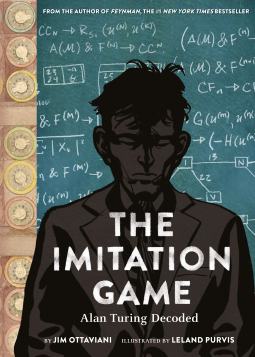
Even after reading the massive biography by Andrew Hodges, and seeing the movie “The Imitation Game,” I am still eager to learn more about the life and work of Alan Turing. “The Imitation Game: Alan Turing Decoded” is a graphic novel (biography) somewhere between those two, and continues to tell his story in an entertaining and informative manner.  This medium, too, is one I am growing very fond of, for its creativity and ease of presentation, in a series of frames like comics, its ability to demonstrate in ways that written text alone cannot. So, do we need more biographies of this man? Yes, and “The Imitation Game” is one of them.

Sunday, February 21, 2016

The Road to Little Dribbling


For risk of sounding like a Dust Bowl trek, this book might be better called “The Road to Cape Wrath.” Little Dribbling could be made up for all we learn about it, which is to say, nothing. Bill Bryson drew a line across a map of the British isle, the “Bryson Line,” which he “discovered.” Starting in Bognor Regis and ending at Cape Wrath, this appears to be the greatest distance in Britain, not from Land’s End to John o’Groats, as his citizenship exam would have you believe. A look at the map (perhaps more useful in print than e-book) and its labeled places shows he spends more time in the south and southwest. So often in books the end is given fewer pages, and here Scotland is reduced to the last chapter. However, I must say that really, I did enjoy this book. For all the insanity in the world, Bryson makes thing a little more bearable, and laughable.