


 Posts
Posts


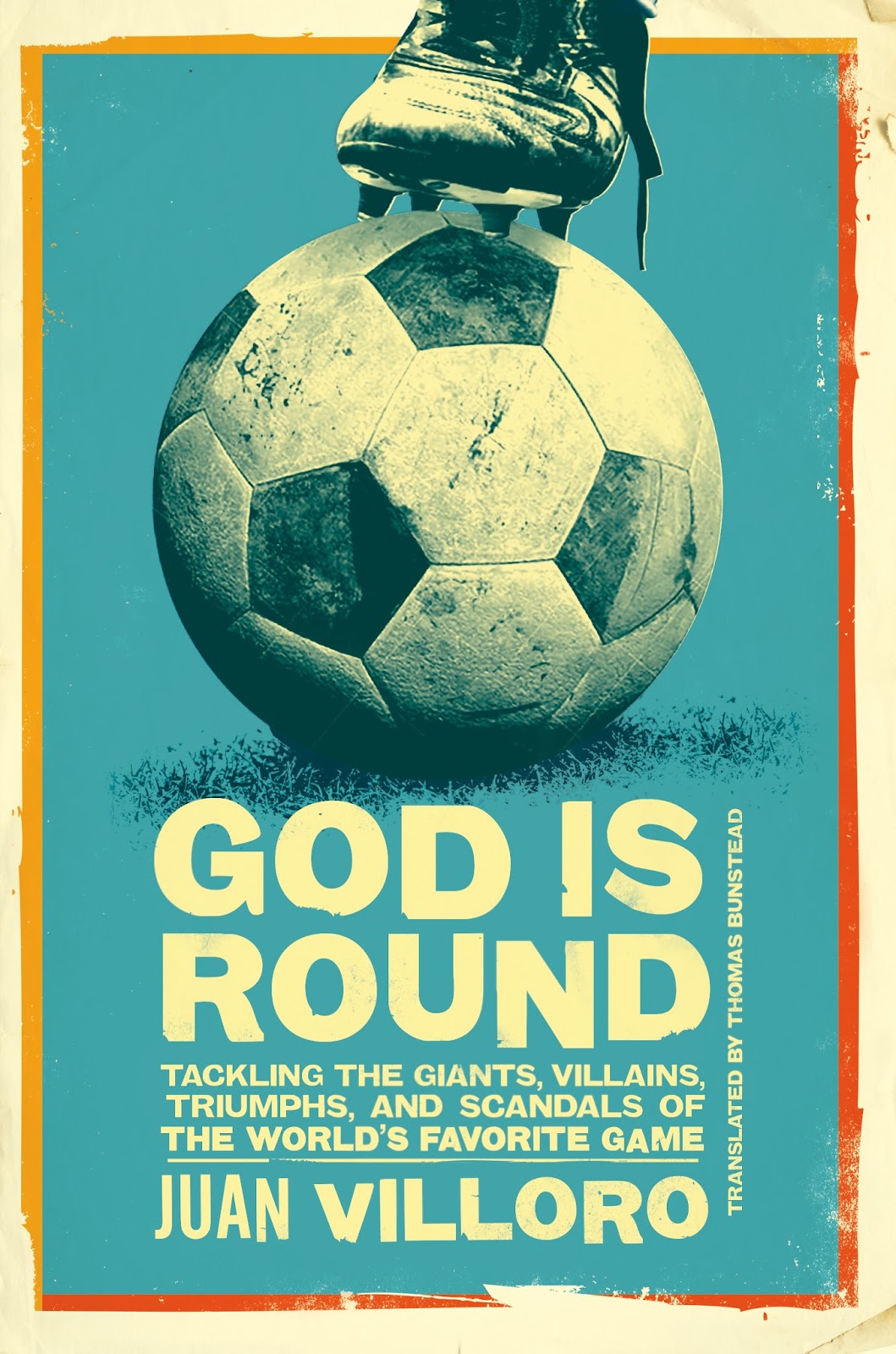
With a title like “God Is Round,” I was drawn to this contagious
level of devotion, for a subject as uniting as soccer. I will refer to the
sport as both soccer and football, the other football having no place here.
This book name comes from a true love for the game, and its author, Juan
Villoro, is an encyclopedia of the sport – and also of literature. He opens
with a bit on an Uruguayan writer who worked first in his country’s national
football stadium, and he throws in references to global literature and other popular
culture – some of which I don’t get. Nor do I know all of the players – but even
a non-follower must recognize more of these legends than they might think. And,
he does not give explanations of the rules, only anecdotes of memorable plays
or behaviors – so you have to be ‘in the know’ to get some things. I am not a “fan,”
but I appreciate the simplicity of the game, its intuitiveness and universality.
Villoro’s writing makes me want to both read about and watch (maybe even play)
more football.
The style here is a stream of consciousness, the
unpredictable directions feeling like a match itself – and I’m not just writing
that, I really did get that sense, coming from the author’s dual passions for
the sport and the written word. The sub-chapters are like plays or episodes; when
telling of the action, you feel like you’re in the middle of it, on the grass.
Football is present in every part of life – Juan Villoro writes this into being.
He explains his country’s, Mexico’s, reasons for why they celebrate the way
they do, and why or how fans everywhere are capable of exploding in shouts. He
riffs on the importance of television, radio, and stadiums – any means of
connecting the fans to the game – but especially the outsized hold of t.v. –
what it shows and doesn’t show. He also has a few things to say about how advertisement
and sponsorship are ruining the game. One downside is that he only covers men’s
soccer, no women’s – which right now, at least in the U.S., is hopefully going
to get its long-overdue fair share.
I learned of the origins of and changes to jersey numbers,
and following a chapter on some of the great number 10s, the most lengthy continuous
topic is a biography of Diego Armando Maradona, highlighting the contrasts
between his life in the game and his excesses off the pitch. Then, there’s a
short chapter on Ronaldo, who of course you’ve heard of, but if you’re like me,
you might get confused with all these “R” names (does this make a heathen of
me?). This being the player’s first name, the following chapter is a “diatribe”
against the “other” Ronaldo (last name), first name Cristiano. You’ve heard of
him too, no doubt; his physique is quite different from the former’s. Both are
out of touch, based both on ego and skill, the first so much so that no one
else can use his name (despite all this confusion) and another player, Ronaldinho,
is named thusly. After them is a chapter on the unlikely Messi, the youthful,
short-in-stature “genius” – a prodigy for sure. Pelé doesn’t have his own full
chapter, but his kingliness is made clear. I like how he and his countrymen are
described as playing at a samba-like pace. Villoro knows every nickname, and
has alternative titles for every person, place, thing or idea. You too will
feel like you have a “football between the ears” when reading this book – it’s
a blast, as exciting as the game itself.
Note: a copy of this title was generously provided by
Restless Books in exchange for an honest review.
p.s. Check out my note on reading in translation. “God Is
Round” meets those reasons and more.

No comments:
Post a Comment