I am a little delayed in finishing this review, but in this
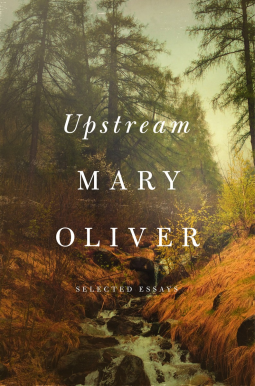
crazy and cruel world, Mary Oliver’s writing can help one in some small way. In
“Upstream” her essays read like poems, her poems are like essays. More than a
sprinkling of pretty words, her thoughts here are longer, the analyses deeper. This
collection feels like the use of a camera lens, beginning out of focus, then
fitting things together in clarity, and blurry again before reversing and
readjusting. There is a sweet spot somewhere in there; you will find it if you
look. Having my own familiarity with Cape Cod, I enjoyed reading about its
landscapes, the fauna including some pets, and a very brief but kind cultural
history of Provincetown, all the way at the end of the arm. Found midstream are
a few short life stories of writers important to Oliver: a sympathetic
biography of Ralph Waldo, a visual portrait of Edgar Allan Poe, and some words
on Whitman and Wordsworth. One of the most memorable descriptions, however, was
of snapping turtles eggs she collected, rather than letting a raccoon get to
them, and how they felt and tasted, scrambled. I’ve been thinking about and
doing a lot of photography lately, so like I said, where you choose to find
focus, in photography and in reading, you can find whatever you’re looking for.
I am a scientist and early career biologist. I am also an active reader, and am curious about almost everything. Of particular interest to me are natural histories and environmental conservation, though I also enjoy a lot of contemporary and classic fiction. I have an interest in Latin American and Spanish culture, and enjoy practicing Spanish by reading books in that language. In addition, I am a musician, and especially love jazz. @mattc3388 on Instagram
Sunday, November 20, 2016
Saturday, October 29, 2016
Warp
Not at all related to “The Magicians,” Lev Grossman’s newly
re-published novella “Warp” does have similar characters and voices. Hollis
(full name Hollister?) Kessler is a lot like Quentin, but again, they live in
different worlds. I call it a novella because it is a bit short to be a full
novel. And, that said, the book had promise – a lot more could have happened,
if it had been longer, or even extended into a series. It was more like a very
long short story or a string of very short short stories. There is also a
sub-text, which I did not read very much into. I interpreted this as being
Hollis’s thoughts: the things he thought but did not say. Perhaps he was an
aspiring writer, and those were some of the things he would have committed to
paper, or if not practice writing in his head, the rest are memorable lines
from pop culture (if that also includes sci-fi). Why the book is called “Warp,”
then, isn’t really explained.
Saturday, October 22, 2016
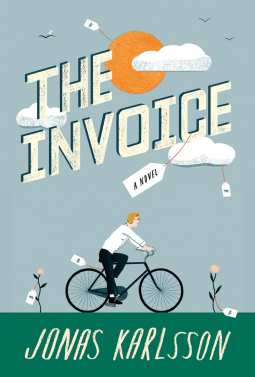
The Invoice
A little book you can read in an evening, “The Invoice” is
charming and curious. Comparisons to Kafka are fitting, as our hero is rolled
into an undertaking with little control over how to get out of it. The W.R.D.
is in the process of a global redistribution of wealth, and every person is
evaluated individually, to pay or receive their fair share. The exact methods
are cryptic but reportedly very accurate. “Experienced happiness” is one metric
brought up, and this is not a reflection of money or possessions, but
experiences themselves. Our man, then, who makes the most of every situation
and is content with his life, is invoiced for more than he could ever afford.
Calling the number on a form, he talks with Maud, who after repeated calls
becomes a lifeline in effect. The language author Jonas Karlsson employs starts
off very simple, but as the story moves along, both the plot and the narration
become more complex. A recommendation: as this book is set in the heat of
summer, read then if possible, though at other times this will still feel good.
Note: I received a free copy of this title through BloggingForBooks in exchange for an honest review.
Sunday, October 9, 2016
Mushrooms of the Redwood Coast
Everyone I’ve told about this book has said “that sounds
very specific,” and indeed this is a niche book. I don’t live near the redwood
coast, but rather on the other side of the country, so this isn’t something I’d
be consulting any time soon, if ever. But why I wanted to check out this book,
besides being interested in field guides and all things natural history, was
that there might be some overlap with mushrooms in the northeast. Certainly
there are at least some fungi that are so widely distributed one could find
them on opposite coasts. The diversity of fungi is overwhelming, so it’s hard
to know where to start. I have a thought, though, that if you want to discover
a new species – of any organism – the easiest place to look would be fungi.
Then you can name what you find however you’d like. But you have to know what
to look for, where to look, and make sure it hasn’t been described already. But
back to the book.
Thursday, September 29, 2016
Donny Hathaway Live
I’m always sad when I ask people if they know Donny Hathaway’s
music and they haven’t heard of him. So much about his biography is sad, but I
don’t want to dwell on that. If his music is sad, it is also optimistic, and
the messages are just as relevant today. Finally there is a book on this great
musician for the world to read (there is some poetry out there, too, so this is
really the first nonfiction). I always believe the best way to learn about
music is to listen, but reading always helps you know what to listen for. In
the 33 1/3 series, Emily J. Lordi chose to write about “Donny Hathaway Live” to
represent this artist.
Friday, September 23, 2016
Cuba!
Here is a book that could be worth getting just for the
photography, but also a book about food and culture that happens to have
recipes. The recipes in Cuba! come from the three authors’ trips to the island,
what they learned there, and how they can be made here. Unless you’re a real
foodie with a decent budget, most people would realistically find one or a few
recipes here to actually make; although, because of the simplicity of the
ingredients, there is a higher percentage of “doable” recipes than in other
niche cookbooks. Whether you make one, none, or many of these recipes, having
this kind of book lets us learn more about cuisine and culture that we might
not otherwise know much about, and is colorful joy to look through.
Monday, September 19, 2016
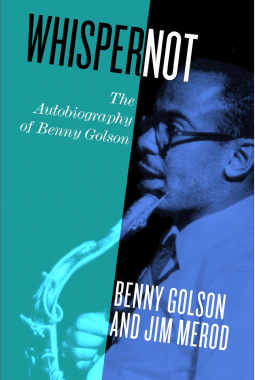
Whisper Not
Benny Golson is one of the best composers in the history of
jazz, so it’s not surprising that his autobiography is also one of the best in
writing. Credit goes too to Golson’s friend Jim Merod, for making this into a
very entertaining book, and a master class in jazz. I didn’t know much about
Benny Golson, but had the understanding that he is a good person respected by
everyone who has worked with him, and the tenor saxophonist who penned some unique
tunes in the jazz repertoire.
Thursday, September 15, 2016
Photographs from the Edge
There are only so many words that can be used to describe
light and conditions for taking a photo, yet it is said that a picture is worth
a thousand words – but why stop there? Photos speak for themselves, in as many
or as few words as the viewer feels like. Knowing what to look for, or how the
picture was composed, of course adds food for thought. “Photographs from the Edge” is a new book by Art Wolfe, with Rob Sheppard, that tells a lot of
stories in a selection of beautiful photos, and also in the words behind them.
Thursday, September 8, 2016
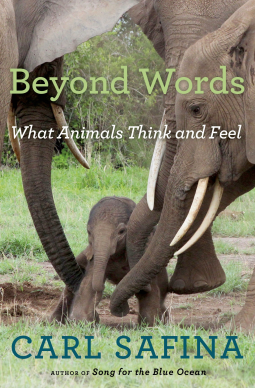
Beyond Words
“Beyond Words” by Carl Safina is a wide-ranging book. How do
I begin to say what it’s about? “What is consciousness like for other animals?”
is one central question, explored in many ways. This book deals with
misconceptions, even in the scientific community. Humans really are not that
different from other animals, and the mind and many other traits have deep
roots from common ancestors. The author often ends a section with a line about
things that might “make us human.” He shows, too, how if something is found not
only in humans but also in other organisms, it doesn’t make sense for that to
be a defining human characteristic. For a scientist of Safina’s stature, just
to write and research such a book is notable. Beliefs about human
exceptionalism are so common yet not based on any evidence (he even singles out
philosophers, saying they have no data), and it’s time we lose our bias and
become more scientific.
Though a relatively long book, at close to 500 pages, my recommendation is that this is definitely worth reading. The conversational tone makes this suitable for readers of any background. If it seems repetitive, thus making for a longer read, that is made up for by the content, that is so interesting, and so much information everyone would be better for knowing. He provides multiple definitions or rephrases things to ensure the reader will understand – we’re not just given one cold offering. He really takes the time to fully explain concepts. I took a lot of notes, so for a long book, here’s my long review.
Saturday, August 27, 2016
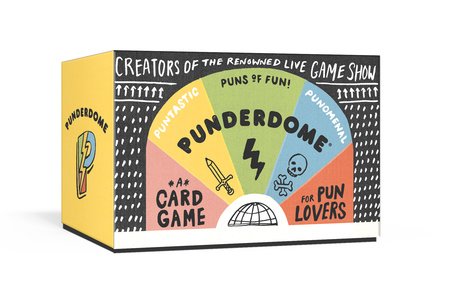
Punderdome
Here is my first review of a non-book: Punderdome, a card
game. The creators say the objective is to make the most groan-worthy pun, although
if I were the host, I’d give higher points to the most clever pun – sometimes puns
are cheap or overused, so usually the less predictable is better, in my opinion.
If you’ve watched a show like @midnight, you’ve seen the instantaneousness of
pun generating (of course, those are professional comedians) – so 90 seconds,
or 120 if you won the first round, might be a little long, but in that time you
can come up with several puns and choose the one you like best. Having bad
jokes on each card could help keep the players in a punderous state of mind,
and there is a card of “just for pun!” examples if more inspiration is needed.
While mostly a card game, there is the addition of two mystery envelopes,
keeping with the game-show vibe. If you don’t have anything on hand to give
away, I think it’d be just as funny to write something imaginary that would
make a bad – or good – prize. I like the suggestion of having one awesome prize
in one envelope and something terrible in the other. And depending on who you’re
playing with, something that could go either way – say a CD of Yanni’s “Greatest
Hits.”
Subscribe to:
Posts (Atom)