Net Galley

Net Galley
Unless noted otherwise, the books reviewed here were provided by Net Galley.

NetGalley Challenge 2016

Sunday, February 21, 2016

The Road to Little Dribbling


For risk of sounding like a Dust Bowl trek, this book might be better called “The Road to Cape Wrath.” Little Dribbling could be made up for all we learn about it, which is to say, nothing. Bill Bryson drew a line across a map of the British isle, the “Bryson Line,” which he “discovered.” Starting in Bognor Regis and ending at Cape Wrath, this appears to be the greatest distance in Britain, not from Land’s End to John o’Groats, as his citizenship exam would have you believe. A look at the map (perhaps more useful in print than e-book) and its labeled places shows he spends more time in the south and southwest. So often in books the end is given fewer pages, and here Scotland is reduced to the last chapter. However, I must say that really, I did enjoy this book. For all the insanity in the world, Bryson makes thing a little more bearable, and laughable.

Monday, February 15, 2016

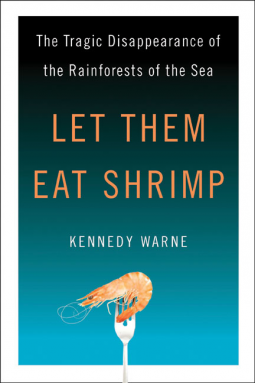
Let Them Eat Shrimp


The title aside, “Let Them Eat Shrimp” by Kennedy Warne is about mangrove ecosystems and the threats facing them. While not an exhaustive natural history of the mangrove trees, and saying very little about the shrimp themselves, this is an important, big picture of the role mangroves play in protecting our world. I was reminded, though not thematically, of “The Underground Girls of Kabul” for the excellent journalism investigating and reporting this subject. The author, traveling, is part of the story but only as one human element – the book is not about him. Nor is this the typical depressing read on the subject of environmentalism (or human rights). This is a report of how we benefit with mangroves in mutuality, not just the consequences of their destruction but some of the solutions for improving their outlook.

Sunday, February 7, 2016

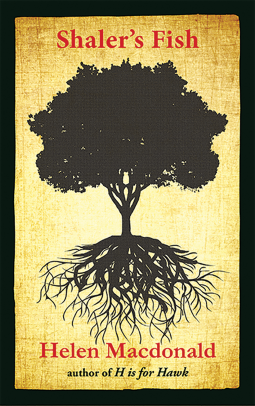
Shaler's Fish


Despite the title, there is no specific mention of Shaler’s fish – which was a real fish – following the introductory quote. The sentiment, however, runs through these poems. That is, studying the subject at hand, be it a fish in a pan or a book on a stand. Agassiz’s lesson is carried out here, in full explorations of natural science and everyday life itself.

Saturday, February 6, 2016

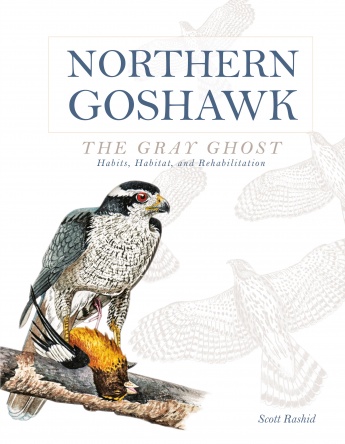
Northern Goshawk, The Gray Ghost


Almost a year ago, I was reading T.H. White’s “The Goshawk” followed by Helen Macdonald’s equally excellent “H is for Hawk.” At the time, I wouldn’t have guessed I’d be reading a third book about this great creature, but I am happy to say that I did. Whereas the two books I read last year were more about the goshawk's role in falconry, this is a study of the wild bird in its own habitat. I didn't realize there are so many species of goshawk, in the Accipiter genus, in the northern parts of the world. In my opinion, this might be the most beautiful hawk (sorry, all other hawks). While he doesn’t explain the name “Gray Ghost,” I find it fitting. This bird, one I have never seen, does seem almost mythical, a force of nature, living in northern forests. Its sound, as described in this book, is eerie (a sample is here: https://www.allaboutbirds.org/guide/Northern_Goshawk/sounds); the author uses the word “cackle.” Those glowing red eyes and smoky, shadowy plumage of charcoal and stone, and their association with Arthurian times, add to my awed perception.

Thursday, February 4, 2016

Vinegar Girl


Back in high school, I read “Dinner at the Homesick Restaurant” and loved it. I don’t know why it took me so long to read something else by Anne Tyler. “Vinegar Girl” is her re-telling of Shakespeare’s “The Taming of the Shrew,” set in Baltimore like her other books. A comedy, this book had me laughing, sometimes out loud, on every page, with a few discomfiting moments mixed in.

Sunday, January 31, 2016

The Reason for Flowers

If you think about all the ways flowers are in our lives, you’ll find they’re everywhere. That’s what Stephen Buchmann covers in “The Reason for Flowers,” a pleasant, well-written read. One of the main reasons I enjoy natural history writing is to learn, and there is a lot to be learned here. A well-published researcher, Buchmann writes with the organizational precision of a scientist, and the editing breaks down the chapters into linked nuggets. Due to this polished style, it makes for a long read; some might be better served if this were an audiobook – my only complaint. The author travels all over the world, and has a global audience in mind. As he lives and works in Arizona, many of his anecdotes come from there.

Friday, January 15, 2016

The Truth According to Us

The WPA writers’ project sounds like a good gig, even for a spoiled senator’s daughter in West Virginia of 1938. Board with a family in a new place, interview people, see the sights, write about it and get paid to do so. Macedonia, West Virginia is this new place, a small town in the Depression, between the World Wars, with old families, ice cream, and a sock factory. This senator’s daughter is Layla Beck, who stays with the Romeyn family on Academy Street. The father, or grandfather, was the “beloved” president of the textile mill when he was still alive, but in 1938 no one in the family works there. Felix, the father of twelve-year old Willa and her younger sister Bird, is often away. It doesn’t take long to work out that Felix is a bootlegger, in a dry town. His charm and subtle force over others lets him get whatever he wants, with a grin. He is sneaky and has a creepy habit of moving very quickly and silently; he is a monster under the surface. His sister Jottie, the girls’ aunt, raises the girls in a pretty full house. Twin aunts Mae and Minerva (I couldn’t help but think of The Simpsons) stay there during the week, but  go back to their husbands on the weekends. Somehow the family also has at least one farm that they run, in addition to running the household, but these feature little in “The Truth According to Us.”

Thursday, December 31, 2015

The year in reviews: 2015


I didn’t read quite as many books as I had hoped to this year, but quality over quantity was a trend. I read lots of different types of books, which reflect my varied interests and curiosities. Here is a quick overview.

The Sea Is Ours


Short stories, steampunk, Southeast Asia: I agree with the editors of this collection that this is an underrepresented niche, and find “The Sea Is Ours” to be a great expansion of this field. There are twelve stories in this anthology, from the Philippines to Vietnam and elsewhere in these Pacific seas. While there are many unfamiliar words (and some more familiar from the heavy Spanish influence in the Philippines), I didn't always know if these words came from the genre or the setting. Not having read much steampunk, there are plenty of onomatopoeias too, and the stories boil down to universal themes in exciting contexts. There are strong-willed characters, sibling conflicts that recall mythology, looming war and struggles against colonialism. Language and identity, authority and defiance are also shaped by the parallel steampunk technology.

Wednesday, December 30, 2015

The Curious Mister Catesby


At the start of this year, I read “Writings and Drawings” by John James Audubon, so I find it fitting to end the year with another excellent collection related to a pioneering naturalist in North America: Mark Catesby. Very little is known about the man himself, but he could have been a jolly good fellow. At the least, he was an excellent scientist and artist, ahead of his time in many ways, in both disciplines. Dedicated to accuracy and quality, his accomplishments are incredible even by today’s standards. “The Curious Mister Catesby,” though a compilation from various talented contributors, tells a linear and complete story. This unique presentation of his chronology, before, after and during his times results in an even, almost symmetrical timeline, unlike a straightforward biography. This is a large book, but one well worth digging into, getting better and better as you go along. It is about the size of a typical textbook, but with a pleasant feel and durable pages that stay open for the reader. Its beautiful design and fine historical research make this a landmark book and a huge contribution to the body of natural history's history.