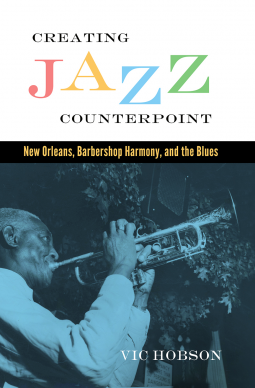
I love jazz. If you know me, you probably already knew that.
I did not, however, know much about the origins of this music, in terms of the
first musicians and early songs. “Creating Jazz Counterpoint” fills in some
gaps in this knowledge through excellent research and effective communication.
Although more of an academic book, Vic Hobson’s writing is clear and concise,
and objectively reconstructs what may have happened, based on the sources
available.
I am a scientist and early career biologist. I am also an active reader, and am curious about almost everything. Of particular interest to me are natural histories and environmental conservation, though I also enjoy a lot of contemporary and classic fiction. I have an interest in Latin American and Spanish culture, and enjoy practicing Spanish by reading books in that language. In addition, I am a musician, and especially love jazz. @mattc3388 on Instagram
Friday, May 27, 2016
Wednesday, May 25, 2016
The Best Gig in Town
Following Edward Allan Faine’s “Ellington at the White House 1969,” “The Best Gig in Town” details the biggest jazz events held at the White
House during the Nixon administration. Nixon is not the first president that
would come to mind for making jazz a regular feature there, but he hosted several
significant events for this genre. Relatively moderate by today’s standards,
Nixon presented artists with political affiliations from both sides, always
seeking political gain. Because these events had to be planned as carefully as
possible, they are well-documented, allowing the author to tell about the lead-ups,
the unfolding, and the reaction that followed, sometimes lasting years, as in
the Ellington case.
Sunday, May 22, 2016
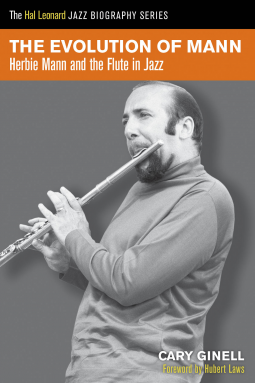
The Evolution of Mann
Herbie Solomon, known as Herbie Mann, made room for the
flute as a lead instrument in jazz, and went to the sources of world music to offer
a taste of many cultures. Herbie Mann could play bebop with the best of them,
but was interested in exploring other subgenres of jazz, and music from all
over the world. The flautist went through phases, notably Brazilian bossa nova,
and Afro-Cuban before that, both of those before Middle Eastern, Japanese, R&B,
and, infamously, disco, among others.
Monday, May 16, 2016
Albina and the Dog-Men
Having read Alejandro Jodorowsky’s “Where the Bird Sings Best,” I was prepared for the weirdness in his second translated novel, “Albina and the Dog-Men.” Weirdness aside, inside, this is a good, entertaining story, a
journey, like any good road trip. Quite often I was reminded of Indiana Jones
looking for the Holy Grail, and even the Temple of Doom. The three main characters
are named for their characteristics, but see transformations that bring out
their true names. Crabby, who walks hunched over like a crab, rejected her
given male name of Isaac, and later turns this into Isabella. She finds and
names amnesiac Albina in the first chapter, and they run from the authorities
together, hitting the road. Just when they need help, they join up with the hat
maker, Amado Dellarosa, making for a strange kind of love triangle.
Saturday, May 14, 2016
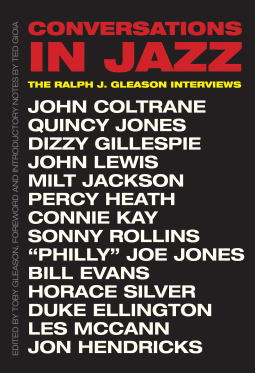
Conversations in Jazz
Ralph J. Gleason was a co-founder of “Rolling Stone”
magazine, but was also very hip to the jazz scene. “Conversations in Jazz” is a
collection of interviews between this man and some of jazz’s greatest artists
(all happen to be men). This book very helpfully provides brief introductions
to the artists, not just their career highlights but what they were doing
around the time of the interview. Gleason seemed to know how to catch them at
interesting moments of transition, and mutual trust and respect brings out some
honest, open dialogue.
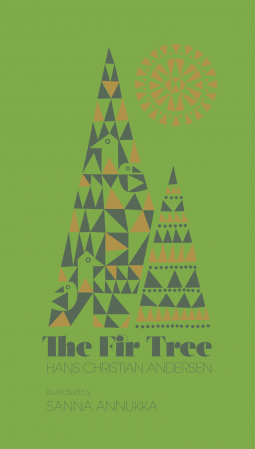
The Snow Queen | The Fir Tree
As
you get older, there comes a point when you look back at childhood stories and
see that there’s something not right about many of them. Hans Christian
Andersen’s tales are like this – there is something dark and deceptively
twisted. Since these particular two share a similar new publication, I am
reviewing them together. “The Snow Queen”: in which Gerda sets out to find her
lost best friend Kay, and “The Fir Tree”: in which a sentient fir tree gets
removed from its forest home and is introduced to fire. Rather than shortening
their summary, I will focus on some common elements and what sets the new
releases apart (the artwork).
Sunday, May 1, 2016
And After Many Days
Set in Nigeria, spanning the 20th century up to right about
now, “And After Many Days” is centered around events in the mid-1990s, shifting
very subtly back and forth in time. While not a whole lot happens in the first
half or so, things do pick up. This is still a very good book, told in the omniscience
of the Utu family, and youngest sibling Ajie in particular. His sister Bibi and oldest brother Paul, Ma and Bendic
(their father, Benedict) are also prominent; their driver Marcus and gateman Ismaila, and
neighbors, extended family, and work colleagues are all in and out of their
home doors, both in Port Harcourt and on vacation in Ogibah. Rewinding to the
childhood of the 90s is important, as a way of remembering Paul, before he
disappeared. Most of the book reads like memories, the way you remember every
small detail when something traumatic or significant happens. There are also
stories of family history before their time, as it was told to them. Ma is a
biology teacher, and Bendic, the only surviving of his siblings, is a lawyer,
respected and intellectual. He is also an older father, and has some health
concerns. Paul looked up to him, and Aije looked up to Paul. The siblings often
fight (as siblings do) and their parents’ discipline is informed, not
punishing. The Christian church is on the side, there when it suits
them, and they sometimes see Bible passages as if stories in their own lives. The
Utu children must choose which schools to attend, are often compared to other
kids their age, and witness tradition against modernity. The dialogue features
words from the country’s many different languages mixed in with the English.
Saturday, April 16, 2016
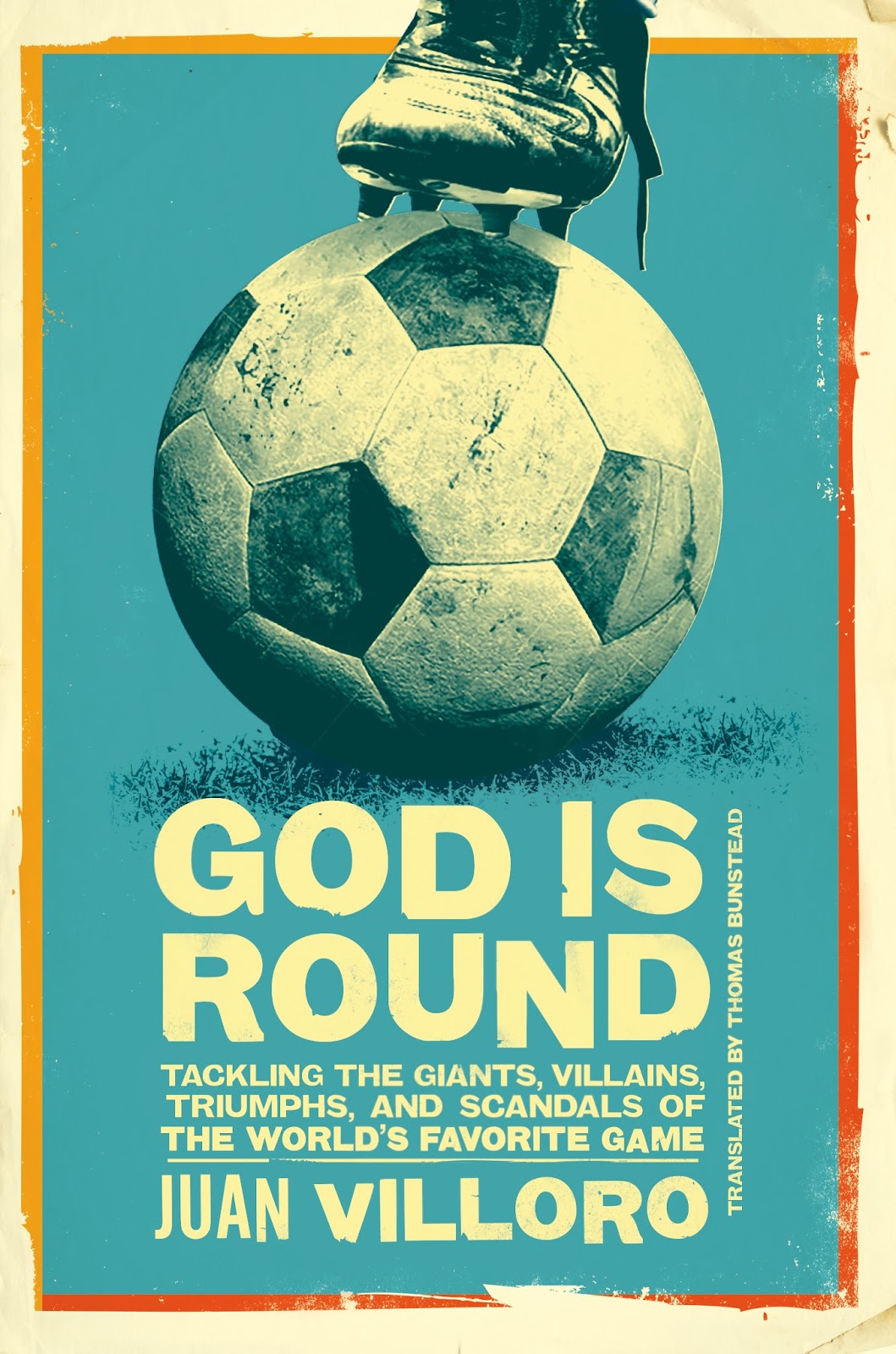
God Is Round
With a title like “God Is Round,” I was drawn to this contagious
level of devotion, for a subject as uniting as soccer. I will refer to the
sport as both soccer and football, the other football having no place here.
This book name comes from a true love for the game, and its author, Juan
Villoro, is an encyclopedia of the sport – and also of literature. He opens
with a bit on an Uruguayan writer who worked first in his country’s national
football stadium, and he throws in references to global literature and other popular
culture – some of which I don’t get. Nor do I know all of the players – but even
a non-follower must recognize more of these legends than they might think. And,
he does not give explanations of the rules, only anecdotes of memorable plays
or behaviors – so you have to be ‘in the know’ to get some things. I am not a “fan,”
but I appreciate the simplicity of the game, its intuitiveness and universality.
Villoro’s writing makes me want to both read about and watch (maybe even play)
more football.
Sunday, April 3, 2016
The Illustrated Compendium of Amazing Animal Facts
“The Illustrated Compendium of Amazing Animal Facts” by Maja
Säfström is a funny little book. Like Matt Sewell’s “Owls,” also published by
Ten Speed Press, it is quirky, nice to look at, and actually informative of
some of nature’s stranger evolutions. This book is even better suited for
younger readers, as the facts can be read within a short attention span. There
is a pleasant ridged texture on the cover, but the cool metallic blue there is
the only color in the book – all the pages are black and white. The drawings
are even and controlled, with enough accuracy for unmistakable identification,
but with a signature artistic freedom, including some speech bubbles from a few
animals. They range from ants to whales, with one to several facts. Sometimes
they’re pictured by themselves; other times they are shown with some of their
habitat. Each has two facing pages devoted to it, seen all in one view. There
are a few trends across species, such as the ability or inability to move
backwards; what they are called in a group; and eating, sleeping and even excreting
habits. Many of the facts you may have heard before, but maybe those younger
readers haven’t yet. I’d like to think these are all indeed facts, and not any
urban legends. 10 birds, 26 mammals, 3 fishes, 11 invertebrates, and 5 reptiles
or amphibians make up this bestiary, yet they do not appear to be in any
taxonomic or alphabetic order. These animals are familiar favorites, from the domestic
to wild, common to rare, and all seem happy to be part of this collection. This
is a fun read, a book to flip through and another way to learn about the
diversity of life.
Note:
I received a free copy of this title through BloggingForBooks in
exchange for an honest review.
Saturday, April 2, 2016
Never Cry Wolf
I was excited to see this classic on NetGalley, first published in 1963 but now available as an ebook. I hadn’t read anything by Farley Mowat before, and I could immediately see, when I began reading “Never Cry Wolf,” that one reason he is celebrated is the rich vocabulary and story-telling he entertained with. I found him reminiscent of Bill Bryson, but even more over-the-top. He seemed to almost go out of his way to never use the same word more than necessary, for full expressiveness, and has a slightly more subtle satire. Comparisons can also be made with Edward Abbey in “Desert Solitaire”: both were alone in a barren place, becoming part of the landscape, working for government agencies, with their own interpretations of meeting their requirements.
Subscribe to:
Posts (Atom)