Birds are amazing, and not just because
of Roger Lederer’s (or my) bias. His new “Beaks, Bones, and Bird Songs” is a comprehensive
book about birds, not limited to the elements mentioned in its title. In
particular, he explains the evolved physical and behavioral characteristics of
these animals and why they’re important in the face of threats ranging from the
immediate to long-term. There is always a trade-off, a disadvantage for every
advantage. However, it’s not a totally bleak picture: how adaptable birds can
be comes up many times in many ways. Plus, there are many unknowns, meaning
more areas for future research, which can help inform conservation.
I am a scientist and early career biologist. I am also an active reader, and am curious about almost everything. Of particular interest to me are natural histories and environmental conservation, though I also enjoy a lot of contemporary and classic fiction. I have an interest in Latin American and Spanish culture, and enjoy practicing Spanish by reading books in that language. In addition, I am a musician, and especially love jazz. @mattc3388 on Instagram
Tuesday, July 19, 2016
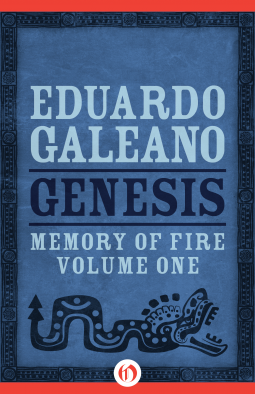
Genesis
In jazz, the Real Book is the standard book of standards,
where each song takes up one page, sometimes two. Here in “Genesis” Eduardo
Galeano follows a similar layout, but rather than sheet music for popular
songs, it is condensed history of the Americas. This is the first of three
volumes in his Memory of Fire trilogy. The first part of this volume is only
about a fifth of the whole. It begins with pre-Columbian myths, and with the history
that follows, is neither fiction nor nonfiction. 1492-1700 are the years, up to
the near-present by the end of the trilogy. Not everything happens in South
America nor is even limited to the Western hemisphere: certain momentous occasions
in Europe fit in the timeline as well. I found that if you only read one or two
of these one-page stories at a time, it is not easy to follow, and perhaps a
little too disconnected for one book. However, this is unlike anything I’ve
ever read, and for a serious student of Latin American history, Galeano’s work
is classic. Keep an eye out for these e-books, as they are sometimes on sale for significant discounts.
Friday, July 8, 2016
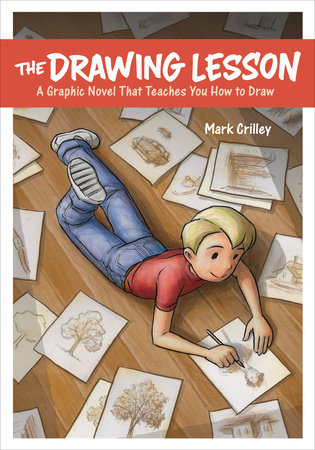
The Drawing Lesson
This is just what I needed. I read “The Drawing Lesson” in pretty
much one sitting and will be reading it again and again. I draw birds and stuff
– mostly birds. Like everyone else, I want to develop my own style, but I also
needed more info on some of the basics in visual art. For example, what author
Mark Crilley calls “negative space” (this is probably the common term in
professional art), which is like the pieces of the picture that don’t really
have interesting details yet hold the whole drawing together. One thing that
makes this such a helpful book is how it summarizes each lesson and builds upon
all previous lessons.
Monday, June 27, 2016
Chronicle of a Last Summer
“Chronicle of a Last Summer” stands out for its modern
structure. Rather than writing about what happens in the book, I can write what
is in the book, since events are secondary to periods of time. The narrator,
whose name never surfaces, lives in Cairo in a family house she describes as
being like a castle, in relative socioeconomic privilege. The house is
unchanged through all the nameless revolutions and power turnovers from one
dictator to the next, through all the family deaths and disappearances.
Saturday, June 25, 2016
Country Editor's Boy
What struck me most in “Country Editor’s Boy” was how much this memoir read like fiction, in style. Because Hal
Borland was a writer by profession, he might have had a tendency to notice and
remember more than his peers – or, he could have done supplementary research to
tell his own story, told somewhat removed, as if another person. Because
it's not fiction, it's not quite as interesting, but has the elements of any
coming-of-age story. Most notably owing to the dialogue, it doesn't feel like
the distant past, but breathes as if you stepped back in time and got to see
firsthand how things were in Flagler, Colorado, just about 100 years ago.
Written when he was an adult, he'd had the time to see the perspective he may
have lacked as a youngster.
Friday, June 17, 2016
Sweet As Cane, Salty As Tears
Thirty years after arriving as a 20-year-old in New York
City, time rushes back towards Katherine Fontenot. She tried to run from her
family in Louisiana, but if she loses her job, if her sister dies, what is she
going to do? Her younger sister, “the sane” one, gets gored by a rhinoceros,
which after escaping the zoo where Karen-Anne was looking after it, was shot
and killed. Much more than her work, the Fontenot family is the heart of this
book, and the family lore – the same stories that get told every time, but
still make people laugh – get told yet again, for the younger generations to
inherit. But more personally, about a third to half of “Sweet As Cane, Salty As Tears” is actually flashbacks, Katherine seeing something, hearing or smelling
or sensing, remembering what she left behind.
Sunday, June 12, 2016
A Buzz in the Meadow
Dave Goulson is a fine natural history writer, and an
important conservationist. His work centers around the less glorious taxa, the
insects that underlie the world’s ecosystems yet receive less attention. He has
a talent for expressing scientific results, when too often the findings are
confined to a bubble where only people specializing in a certain field will
read and understand the results. Books like “A Buzz in the Meadow” are needed
if you feel you don’t know enough about large groups of life forms like plants
and insects. However, if you don’t like thinking about insect parts and reproduction
(or that of animals in general), know that this is not for everyone. Still, Goulson
is a very good communicator, and this is an excellent book.
Tuesday, May 31, 2016
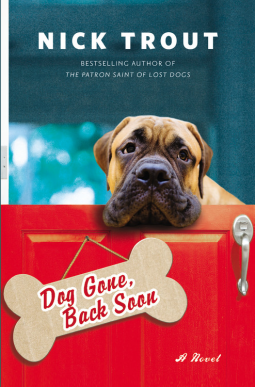
Dog Gone, Back Soon
When you need something light and entertaining to read, a
book like “Dog Gone, Back Soon” is sure to do the trick. Set in a small town in
Vermont, the story of veterinarian Cyrus Mills returning to take over his late
father’s practice fits the bill – funny and a good time. There are a lot of subplots
that get the narrator into more and more of a pickle. There’s the move to the
cold winter from the South, which can be
enough for some people as-is; add to that the challenge of making a second
date, a tight budget, a ridiculous and unnecessary threat of competition from
the next-town-over’s vet practice, and of course all of the patients he takes
on.
Friday, May 27, 2016
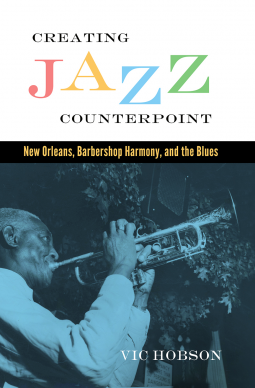
Creating Jazz Counterpoint
I love jazz. If you know me, you probably already knew that.
I did not, however, know much about the origins of this music, in terms of the
first musicians and early songs. “Creating Jazz Counterpoint” fills in some
gaps in this knowledge through excellent research and effective communication.
Although more of an academic book, Vic Hobson’s writing is clear and concise,
and objectively reconstructs what may have happened, based on the sources
available.
Wednesday, May 25, 2016
The Best Gig in Town
Following Edward Allan Faine’s “Ellington at the White House 1969,” “The Best Gig in Town” details the biggest jazz events held at the White
House during the Nixon administration. Nixon is not the first president that
would come to mind for making jazz a regular feature there, but he hosted several
significant events for this genre. Relatively moderate by today’s standards,
Nixon presented artists with political affiliations from both sides, always
seeking political gain. Because these events had to be planned as carefully as
possible, they are well-documented, allowing the author to tell about the lead-ups,
the unfolding, and the reaction that followed, sometimes lasting years, as in
the Ellington case.
Subscribe to:
Posts (Atom)