Net Galley

Net Galley
Unless noted otherwise, the books reviewed here were provided by Net Galley.

NetGalley Challenge 2016

Sunday, August 9, 2015

Voices of the Wild


“Voices of the Wild” is a short book by Bernie Krause, an interesting person who is clearly an expert in this specialized field of recording natural soundscapes. However, this particular book didn’t do much for me. I found the writing to be a little dense, in the sense that too many “big words” made it sound more like a rhetorical speech, when really there is something interesting underneath. He does use some helpful analogies, though, and directs the reader to other resources, including an accompanying website with audio clips, moved to: http://yalebooks.com/yupbooks/book.asp?isbn=9780300206319

Monday, August 3, 2015

A Bone to Pick


I wish I had realized at first that this is a collection of pieces Mark Bittman had already written and published over the past few years. One of my first impressions, then, was that some of his points are repeated quite a bit. However, they are still arguments that need to be heard. He reminds us – and most of us need reminding – what “real food” is: where we can identify the ingredients. He offers a fair consideration of other alternatives, including meatless “chickin’” and healthier fast food endeavors. He covers everything from the ecology of farming to human metabolism and the discussion of what really might be causing food-related diseases.

Wednesday, July 29, 2015

Spirals in Time


Seashells come from living things, you know. We know the shells, but not always the inhabitants. Note that the animals themselves are pictured in the beautiful cover of Helen Scales’ “Spirals in Time”. This may pull you into the book, but her gift for writing is just as pleasing. In every natural history told in this book, there is just as much about the original organism as there is the human relation. Black and white illustrations add another very nice touch, but the writing is so lucid that a mental image is already easily formed. Having read Anthony Doerr's “All the Light We Cannot See” and “The Shell Collector” I had some appreciation for seashells outside my preexisting fascination with biodiversity, but now  I will observe them with a new, broader perspective. And if John Steinbeck and Ed Ricketts couldn’t explain to others why they were studying these creatures, Helen Scales sparks curiosity. She explains why, in addition to being cool and interesting, such research has bigger implications, and how it relates to humans.

Sunday, July 12, 2015

Where the Bird Sings Best


“Weird” might be my choice if I had to describe Alejandro Jodorowsky’s “Where the Bird Sings Best” in one word. That was my biggest impression, but there are so many dimensions to this “autobiographical novel” that make it unique and at the same time another masterpiece of Latin American literature. I will warn readers that there are many disturbing scenes, but from what I gather, those familiar with Jodorowsky’s other work will find this to share many of his trademark elements. In fact, his family history, through a curtain of fiction, helps explain where he comes from and why he is the way he is.

Monday, June 15, 2015

Rain


For such a wide topic as rain, Cynthia Barnett manages to tie this together. Her book “Rain” feels more like a collection of magazine articles than a book, but there are reoccurring characters, important facts and developments, and the last chapter, a sort of review, comes full circle. Much more for fans of history than those simply interested in the science, this book is brimming with factoids and stories, in clear, easy to read sentences. For example, “ombrophobia” is the fear of rain, and “pluvial” is the Latin word for rain. We read about why our fingers wrinkle up when they get wet, and where “cloud nine” as well as more technical terms like “forecast” came from.

Saturday, May 30, 2015

May


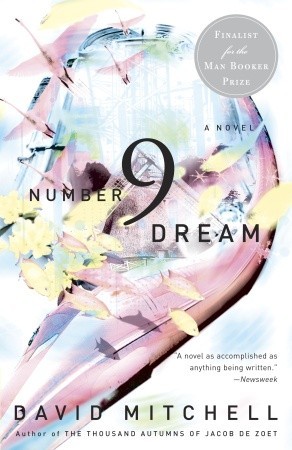
I am reading the novels of David Mitchell. Also, I finished reading the biography of Alan Turing that inspired in part the movie ‘The Imitation Game’.

Sunday, April 19, 2015

Headstrong

“Headstrong” is a joy to read, celebrating the triumph of human accomplishment, in the lives of 52 amazing women scientists. Despite the history of inequalities, which still persist, these women defined hard work and dedication, and made the world a better place. A collection rather than a continuous timeline, there are some overlaps and connections, such as in genetics and developmental biology, and in the physics department as well – after all, it is a small world we live in. The books is well organized in this sense, well written, and refreshingly positive.

Monday, April 6, 2015

John Shaw's Guide to Digital Nature Photography


“This book isn’t about point-and-shoot cameras or smartphone cameras. It’s about digital single-lens-reflex (DSLR) photography.”

I was naïve to not realize this, and so was a little bummed out. Since my camera has so many built-in features, I hoped I could apply some of the ideas in this book, but without a DSLR camera, there is not much left to work with. If I gain access to such equipment, though, this book will see me well prepared.

This is a very technical guide. The first chapter is on gear, jumping right into the heavy. The reason why most “extremely competent” people that feel they don’t know how to operate a camera is probably because the terms and numbers are like another language – if you don’t know what anything is, how can you make effective use of it? So, a glossary would be nice, or parenthetical notes each time a new abbreviation is introduced. However, if you do already know the jargon, this book tells you what you can do to take control of the technology. And, if you stick with it, the terms become clearer in meaning, as in any craft. This really is geared towards more professional photographers, or at least people who can afford expensive photography equipment, and can go to destinations. Not that there isn’t an abundance of photo-worthy subjects without having to travel, but that’s another discussion. The chapter on composition is most relevant to the general user, and for any non-photographer, the photos in this book are very nice to look at.

Note: I received a free copy of this title through BloggingForBooks in exchange for an honest review.

Monday, March 23, 2015

Black Moon


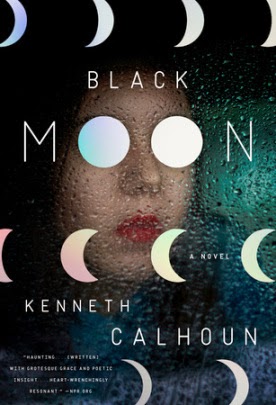
“Black Moon” follows three main character groups through a crisis that leaves the people of their world incapable of sleeping. Matt Biggs and his wife Carolyn, who have not yet succeeded in having a child, are introduced first. Biggs is leaving his career in advertisement, which he can’t stand. Carolyn makes stop-motion films, and is totally into her work. Before this all started, Carolyn had had trouble sleeping, normal insomnia. Next are Chase, who has ED and makes a painful attempt to overcompensate, and his friend Jordan, who has a bad eye. We learn of Chase’s ex-girlfriend Felicia, who comes to more prominence midway through the book. Last, there is Lila, a teenager whose parents, like almost everyone else, failed against insomnia. Her father is paranoid about what is causing this whole situation; paranoia also appearing to be a symptom of the epidemic.

Tuesday, March 10, 2015

H is for Hawk


Part of why “H is for Hawk” is so good is because it is so different. Others have had a hard time finding a category for this work; so do I. The word “passion” may be over used, but Helen MacDonald has a true dedication to falconry. Her father, a world-class photographer, passed away, and Helen turned to this sport, if “sport” is even the right word. In particular, she chose to fly a goshawk, who she named Mabel. More on why a goshawk in a moment. You will see why, perhaps, but I won’t tell you why she chose that name for the bird.