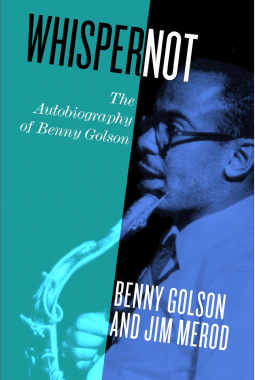
Benny Golson is one of the best composers in the history of
jazz, so it’s not surprising that his autobiography is also one of the best in
writing. Credit goes too to Golson’s friend Jim Merod, for making this into a
very entertaining book, and a master class in jazz. I didn’t know much about
Benny Golson, but had the understanding that he is a good person respected by
everyone who has worked with him, and the tenor saxophonist who penned some unique
tunes in the jazz repertoire.
I am a scientist and early career biologist. I am also an active reader, and am curious about almost everything. Of particular interest to me are natural histories and environmental conservation, though I also enjoy a lot of contemporary and classic fiction. I have an interest in Latin American and Spanish culture, and enjoy practicing Spanish by reading books in that language. In addition, I am a musician, and especially love jazz. @mattc3388 on Instagram
Monday, September 19, 2016
Thursday, September 15, 2016
Photographs from the Edge
There are only so many words that can be used to describe
light and conditions for taking a photo, yet it is said that a picture is worth
a thousand words – but why stop there? Photos speak for themselves, in as many
or as few words as the viewer feels like. Knowing what to look for, or how the
picture was composed, of course adds food for thought. “Photographs from the Edge” is a new book by Art Wolfe, with Rob Sheppard, that tells a lot of
stories in a selection of beautiful photos, and also in the words behind them.
Thursday, September 8, 2016
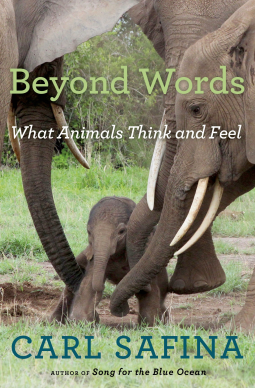
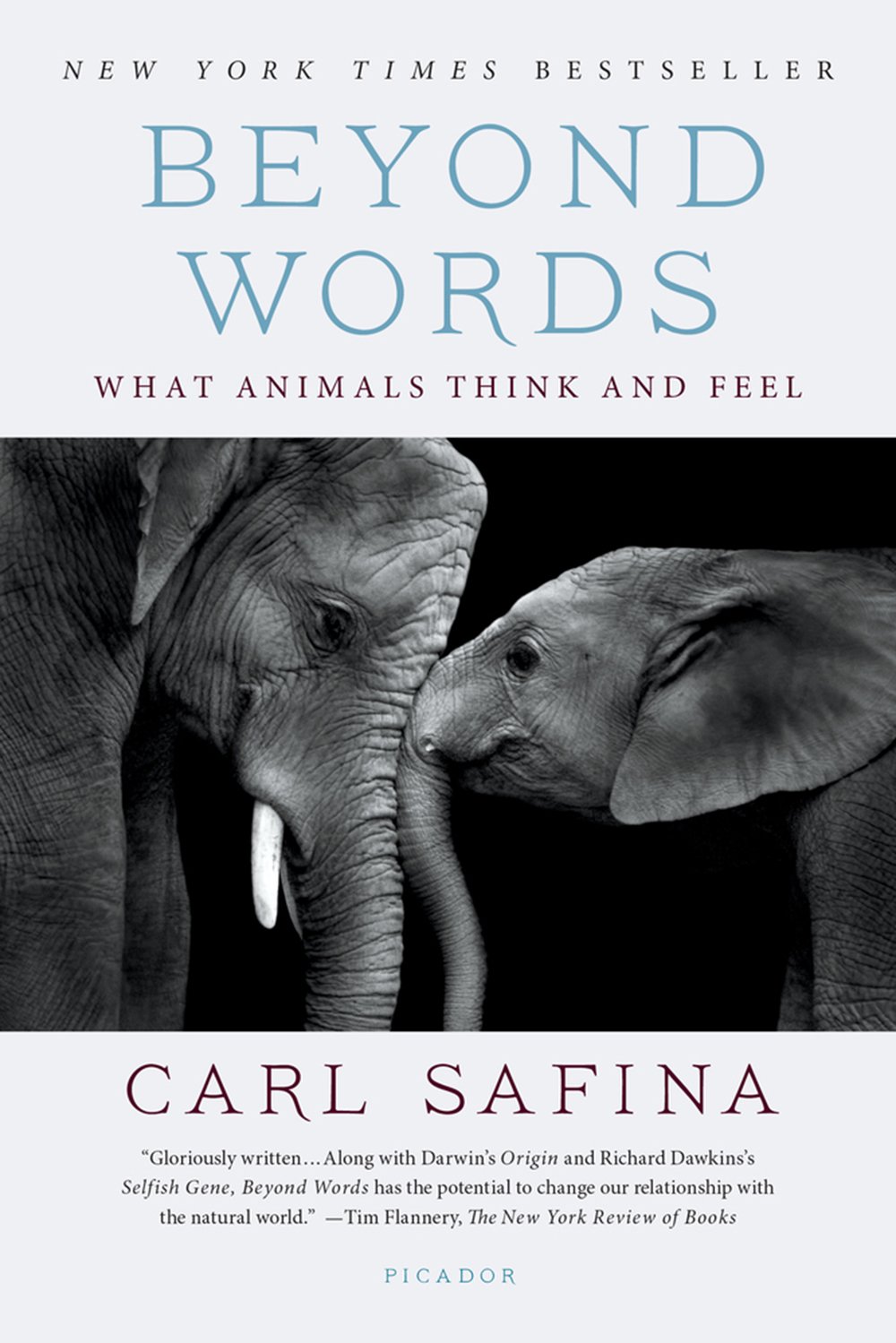
Beyond Words
“Beyond Words” by Carl Safina is a wide-ranging book. How do
I begin to say what it’s about? “What is consciousness like for other animals?”
is one central question, explored in many ways. This book deals with
misconceptions, even in the scientific community. Humans really are not that
different from other animals, and the mind and many other traits have deep
roots from common ancestors. The author often ends a section with a line about
things that might “make us human.” He shows, too, how if something is found not
only in humans but also in other organisms, it doesn’t make sense for that to
be a defining human characteristic. For a scientist of Safina’s stature, just
to write and research such a book is notable. Beliefs about human
exceptionalism are so common yet not based on any evidence (he even singles out
philosophers, saying they have no data), and it’s time we lose our bias and
become more scientific.
Though a relatively long book, at close to 500 pages, my recommendation is that this is definitely worth reading. The conversational tone makes this suitable for readers of any background. If it seems repetitive, thus making for a longer read, that is made up for by the content, that is so interesting, and so much information everyone would be better for knowing. He provides multiple definitions or rephrases things to ensure the reader will understand – we’re not just given one cold offering. He really takes the time to fully explain concepts. I took a lot of notes, so for a long book, here’s my long review.
Saturday, August 27, 2016
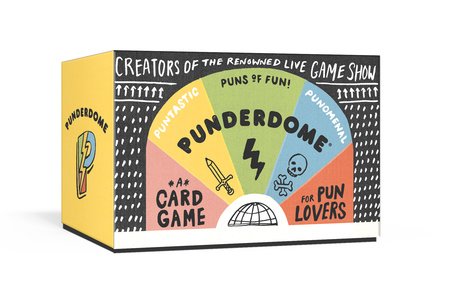
Punderdome
Here is my first review of a non-book: Punderdome, a card
game. The creators say the objective is to make the most groan-worthy pun, although
if I were the host, I’d give higher points to the most clever pun – sometimes puns
are cheap or overused, so usually the less predictable is better, in my opinion.
If you’ve watched a show like @midnight, you’ve seen the instantaneousness of
pun generating (of course, those are professional comedians) – so 90 seconds,
or 120 if you won the first round, might be a little long, but in that time you
can come up with several puns and choose the one you like best. Having bad
jokes on each card could help keep the players in a punderous state of mind,
and there is a card of “just for pun!” examples if more inspiration is needed.
While mostly a card game, there is the addition of two mystery envelopes,
keeping with the game-show vibe. If you don’t have anything on hand to give
away, I think it’d be just as funny to write something imaginary that would
make a bad – or good – prize. I like the suggestion of having one awesome prize
in one envelope and something terrible in the other. And depending on who you’re
playing with, something that could go either way – say a CD of Yanni’s “Greatest
Hits.”
Tuesday, August 23, 2016
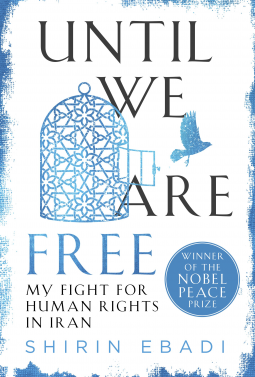
Until We Are Free
What at first feels like a collection of disconnected events
becomes a more linked memoir of Shirin Ebadi’s ongoing efforts for human rights,
and her life after receiving her well-deserved Nobel Peace Prize. Unable to
keep her judgeship in Iran, she was still able to practice law, and it is clear
from her interactions with anyone working against her that she excelled at
this. She knows very well how the system operates, having learned the hard way,
but this makes her stronger and better prepared to bring about justice. She is
a human like any of us, and includes the details she remembers from her home
country, the food, the sounds, the interiors of buildings where she worked, the
way people presented themselves. Even though she is exile, and the intelligence
ministry has done unthinkable things to try to stop her, she continues to work
for what is right.
Wednesday, August 10, 2016
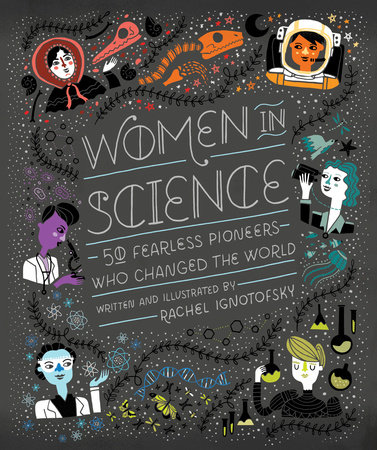
Women in Science
Very inspiring! is one way to describe “Women in Science,”
an awesome new book by Rachel Ignotofsky. Reading this reminded me why I wanted
to be a scientist in the first place. The excitement of discovery, defying the
status quo, and the positive impact of applying scientific findings to benefit communities.
Not only were these women brilliant scientists, they worked just as hard to
advance social causes, and to apply their findings to the betterment of
humanity.
Sunday, August 7, 2016
The Man Who Touched His Own Heart
“The Man Who Touched His Own Heart” is the kind of book so
good you’ll be re-telling some of these stories to your friends and family the
whole time you’re reading. It’s a good thing I’m not so squeamish anymore – and
a wonder I was a biology major – but after a few chapters, I found myself
adjusted and just absorbed in the fascinating complexity of the circulatory
system, and the adventurous history of how we came to understand what we now
know about it. Like the titular character (that was one story I had to share
multiple times), these are people who went into new territory at times when
doing so was unthinkable. Many of them used their own bodies when no other
options were available, and all sought, with a vision, a solution to a known
problem. The progress of medical knowledge had slow beginnings, with frustratingly
long gaps and setbacks, even the delayed inclusion of women and people of color
to contribute. Now this pace seems accelerated, where many of the discoveries
described in this book are commonplace, made into standard practice – where available,
as the author takes care to point out: the world is still not equitable.
Tuesday, July 19, 2016
Beaks, Bones, and Bird Songs
Birds are amazing, and not just because
of Roger Lederer’s (or my) bias. His new “Beaks, Bones, and Bird Songs” is a comprehensive
book about birds, not limited to the elements mentioned in its title. In
particular, he explains the evolved physical and behavioral characteristics of
these animals and why they’re important in the face of threats ranging from the
immediate to long-term. There is always a trade-off, a disadvantage for every
advantage. However, it’s not a totally bleak picture: how adaptable birds can
be comes up many times in many ways. Plus, there are many unknowns, meaning
more areas for future research, which can help inform conservation.
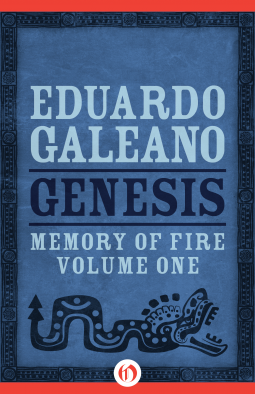
Genesis
In jazz, the Real Book is the standard book of standards,
where each song takes up one page, sometimes two. Here in “Genesis” Eduardo
Galeano follows a similar layout, but rather than sheet music for popular
songs, it is condensed history of the Americas. This is the first of three
volumes in his Memory of Fire trilogy. The first part of this volume is only
about a fifth of the whole. It begins with pre-Columbian myths, and with the history
that follows, is neither fiction nor nonfiction. 1492-1700 are the years, up to
the near-present by the end of the trilogy. Not everything happens in South
America nor is even limited to the Western hemisphere: certain momentous occasions
in Europe fit in the timeline as well. I found that if you only read one or two
of these one-page stories at a time, it is not easy to follow, and perhaps a
little too disconnected for one book. However, this is unlike anything I’ve
ever read, and for a serious student of Latin American history, Galeano’s work
is classic. Keep an eye out for these e-books, as they are sometimes on sale for significant discounts.
Friday, July 8, 2016
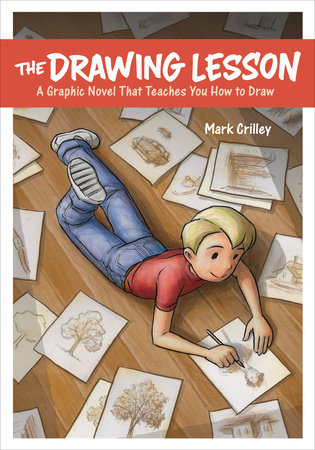
The Drawing Lesson
This is just what I needed. I read “The Drawing Lesson” in pretty
much one sitting and will be reading it again and again. I draw birds and stuff
– mostly birds. Like everyone else, I want to develop my own style, but I also
needed more info on some of the basics in visual art. For example, what author
Mark Crilley calls “negative space” (this is probably the common term in
professional art), which is like the pieces of the picture that don’t really
have interesting details yet hold the whole drawing together. One thing that
makes this such a helpful book is how it summarizes each lesson and builds upon
all previous lessons.
Subscribe to:
Posts (Atom)