Net Galley

Net Galley
Unless noted otherwise, the books reviewed here were provided by Net Galley.

NetGalley Challenge 2016

Thursday, December 31, 2015

The year in reviews: 2015


I didn’t read quite as many books as I had hoped to this year, but quality over quantity was a trend. I read lots of different types of books, which reflect my varied interests and curiosities. Here is a quick overview.

The Sea Is Ours


Short stories, steampunk, Southeast Asia: I agree with the editors of this collection that this is an underrepresented niche, and find “The Sea Is Ours” to be a great expansion of this field. There are twelve stories in this anthology, from the Philippines to Vietnam and elsewhere in these Pacific seas. While there are many unfamiliar words (and some more familiar from the heavy Spanish influence in the Philippines), I didn't always know if these words came from the genre or the setting. Not having read much steampunk, there are plenty of onomatopoeias too, and the stories boil down to universal themes in exciting contexts. There are strong-willed characters, sibling conflicts that recall mythology, looming war and struggles against colonialism. Language and identity, authority and defiance are also shaped by the parallel steampunk technology.

Wednesday, December 30, 2015

The Curious Mister Catesby


At the start of this year, I read “Writings and Drawings” by John James Audubon, so I find it fitting to end the year with another excellent collection related to a pioneering naturalist in North America: Mark Catesby. Very little is known about the man himself, but he could have been a jolly good fellow. At the least, he was an excellent scientist and artist, ahead of his time in many ways, in both disciplines. Dedicated to accuracy and quality, his accomplishments are incredible even by today’s standards. “The Curious Mister Catesby,” though a compilation from various talented contributors, tells a linear and complete story. This unique presentation of his chronology, before, after and during his times results in an even, almost symmetrical timeline, unlike a straightforward biography. This is a large book, but one well worth digging into, getting better and better as you go along. It is about the size of a typical textbook, but with a pleasant feel and durable pages that stay open for the reader. Its beautiful design and fine historical research make this a landmark book and a huge contribution to the body of natural history's history.

Monday, December 7, 2015

Felicity


I still don’t know how to review poetry. My second attempt is also for Mary Oliver. “Felicty” is a short collection of short poems. The sparsity stands out, but even more so is the feeling generated within that little space. While there are some wordings I wouldn’t have gone with, there is at least one phrase in each poem that makes it worthwhile. This book works as a whole, too, and fans of Rumi will find that poet wandering through. I personally liked the nature part better than the romance, the intimacy, kissing, etc. Poets’ work is to stir emotions, and make us see what we might have missed around us. In that sense, this is a success.

Law of the Jungle


This is an interesting story, but a hard one to tell. At times “Law of the Jungle” reads like a novel (but nonfiction), other times like a radio story, but other times it feels a little disjointed. The author clearly did his research, and while he knows the story inside and out, I had a hard time putting the stand-alone sentences into order. At times, too, I had to wonder about the author’s potential bias. He paints the big oil companies like “bad guys,” which in many ways they could be, but he doesn’t really try to tell their side objectively. The book just seems to show both oil companies and lawyers at their worst. Really, I’m more interested in environmental issues, and human rights in general, than lawyers showing off.

Sunday, November 29, 2015

Letters to Yeyito


I recently had the great privilege to see Chucho Valdés and the Afro-Cuban Messengers in concert, presenting a tribute to Irakere, the legendary group of which Paquito D’Rivera was also a founding member. In a chapter (letter) dedicated to Chucho’s father Bebo, D’Rivera describes the pianist as "one of my closest friends and collaborators as well as one of the most positive influences on my career.” Even without this connection, I was excited to read this great musician’s own words. I didn’t know this, but “Letters to Yeyito” is not the saxophonist and clarinetist’s first book: he has also written “My Sax Life” and a novel, “Oh, La Habana!” These letters to a lost fan more than stand alone; this is a fully realized book where Paquito shares almost encyclopedic knowledge of the music world. He gives us a history of jazz and especially Latin jazz, including the contributions from Latin America and other parts of the world that are often forgotten in other chronicles. Indeed, one of his goals with this book was just that, and the result is, in my opinion, one of the best music memoirs yet.

Sunday, November 22, 2015

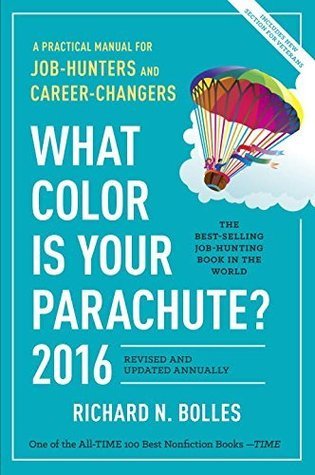
What Color Is Your Parachute? 2016


25387728
There is a reason this book is so popular, and had been in print and updated since it came out. How can something be so universal, so applicable to all job seekers? That's a big question, but trust me, if you are trying to find a new job, this book will have something that can help you. One example is that job hunters and employers are looking for different things, but their roles are unchanged by time. Knowing and being aware of these things will make a difference in how you can job hunt better. I myself am starting my career right now, and I can see that what he's saying is true and well-analyzed. The author cites quantified success rates of different strategies to help make his point.

Saturday, November 21, 2015

Atmosphere of Hope


Climate change must be the biggest challenge facing us now, and will continue to be for at least one hundred more years. I do not know nearly enough about this problem, but I do know we need to take action, and that the best place any of us can start is to learn more. “Atmosphere of Hope” by Tim Flannery is an excellent introduction to many climate issues, and has enough coverage for those already in the know who may want a fuller picture.

Tuesday, November 10, 2015

Slade House


Now with “Slade House” I am all caught up on David Mitchell’s novels. “The Bone Clocks” blew open my view of the Mitchell-verse, changing my interpretation of his literary world. “Slade House” is most directly related to its predecessor, as it continues the more paranormal/supernatural/science fiction – whatever you want to call it – and is a good follow-up (or maybe even a prequel) as well. The other books, even with all their connections to each other, are more literary fiction, though each is so different in structure and in style. Even within the books there are dramatic changes in voice, setting, and perception.

Thursday, October 29, 2015

2 A.M. at The Cat’s Pajamas – revisited


I liked this book so much I wanted to re-read it – this time on paper. "2 A.M. at The Cat's Pajamas" is one of my favorite fictions, one of the best I have read. What did I like so much about this book? It’s about jazz: my favorite music; this is a jazz book, with music noodling throughout. It’s, in a way, cozy: you feel like you’re hanging out with friends at a house party, in a music club, at a restaurant, walking down the street. Its style, the time frame, shows normal people on a normal day intersecting in a way much more interesting than normal, funny and sad at the same time, and everything in between. The paperback edition has extra features, including Q&A with the author, and a playlist that will be the perfect accompaniment to this fun and delightful read.