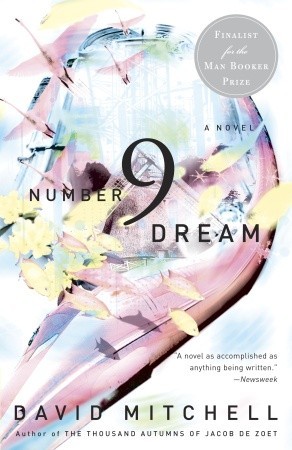
I liked this book so much I wanted to re-read it – this time
on paper. "2 A.M. at The Cat's Pajamas" is one of my favorite fictions, one of the best I have read. What did I like so much about this book? It’s about jazz: my favorite music; this is a
jazz book, with music noodling throughout. It’s, in a way, cozy: you feel like
you’re hanging out with friends at a house party, in a music club, at a
restaurant, walking down the street. Its style, the time frame, shows normal
people on a normal day intersecting in a way much more interesting than normal,
funny and sad at the same time, and everything in between. The paperback
edition has extra features, including Q&A with the author, and a playlist
that will be the perfect accompaniment to this fun and delightful read.
I am a scientist and early career biologist. I am also an active reader, and am curious about almost everything. Of particular interest to me are natural histories and environmental conservation, though I also enjoy a lot of contemporary and classic fiction. I have an interest in Latin American and Spanish culture, and enjoy practicing Spanish by reading books in that language. In addition, I am a musician, and especially love jazz. @mattc3388 on Instagram
Thursday, October 29, 2015
Tuesday, October 20, 2015
Owls
Following my review of Scott Rashid's “The Great Horned Owl”,
another book about these awesome birds. The species I know are here: Barn, Barred,
and Great Horned (with a different sentiment than in the previous book), yet no
Screech Owls. With all the biodiversity, even a sampling of 50 species can only
cover so much. I am mostly familiar with birds of North America, so I get excited
to learn of different species from other continents. Unlike most other guides,
the birds in this little book are organized by habitat (woodland, tropical,
wilderness, desert), not taxonomically or geographically.
Monday, October 19, 2015
The Great Horned Owl
As is said in the eloquent introduction to this book, the
author’s hours and hours spent observing and rehabilitating these animals,
combined with the presentation of his artwork, gives the reader an “in-depth” feel
for what these birds are like. You can catch his excitement and sense of
wonder. I too am amazed at how the owls camouflage with their surroundings, for
example. I couldn’t really grasp the huge size of these birds until I saw the
picture of a house finch next to a Great Horned Owl, who didn’t look like it
cared at all that the other, smaller bird was there. As it turns out, they will
eat pretty much anything their size or smaller. “The Great Horned Owl” by Scott
Rashid is a great natural history of a fascinating and beautiful bird species.
Monday, October 12, 2015
The Underground Girls of Kabul
I had wanted to read this book for a while, and I am so glad
I finally did. “The Underground Girls of Kabul” is so much more than what I expected
– maybe I didn’t even know what to expect. Two of my biggest impressions,
overall are 1) this is excellent journalism, and very nice and refreshing to
read something so unbiased, yet personal at the same time, and 2) this is a really
interesting, mind-opening story.
Sunday, August 9, 2015
Voices of the Wild
“Voices of the Wild” is a short book by Bernie Krause, an interesting person who is clearly an expert in this specialized field of recording natural soundscapes. However, this particular book didn’t do much for me. I found the writing to be a little dense, in the sense that too many “big words” made it sound more like a rhetorical speech, when really there is something interesting underneath. He does use some helpful analogies, though, and directs the reader to other resources, including an accompanying website with audio clips, moved to: http://yalebooks.com/yupbooks/book.asp?isbn=9780300206319
Monday, August 3, 2015
A Bone to Pick
I wish I had realized at first that this is a collection of pieces Mark Bittman had already written and published over the past few years. One of my first impressions, then, was that some of his points are repeated quite a bit. However, they are still arguments that need to be heard. He reminds us – and most of us need reminding – what “real food” is: where we can identify the ingredients. He offers a fair consideration of other alternatives, including meatless “chickin’” and healthier fast food endeavors. He covers everything from the ecology of farming to human metabolism and the discussion of what really might be causing food-related diseases.
Wednesday, July 29, 2015
Spirals in Time
Seashells come from living things, you know. We know the shells, but not always the inhabitants. Note that the animals themselves are pictured in the beautiful cover of Helen Scales’ “Spirals in Time”. This may pull you into the book, but her gift for writing is just as pleasing. In every natural history told in this book, there is just as much about the original organism as there is the human relation. Black and white illustrations add another very nice touch, but the writing is so lucid that a mental image is already easily formed. Having read Anthony Doerr's “All the Light We Cannot See” and “The Shell Collector” I had some appreciation for seashells outside my preexisting fascination with biodiversity, but now I will observe them with a new, broader perspective. And if John Steinbeck and Ed Ricketts couldn’t explain to others why they were studying these creatures, Helen Scales sparks curiosity. She explains why, in addition to being cool and interesting, such research has bigger implications, and how it relates to humans.
Sunday, July 12, 2015
Where the Bird Sings Best
“Weird” might be my choice if I had to describe Alejandro
Jodorowsky’s “Where the Bird Sings Best” in one word. That was my biggest
impression, but there are so many dimensions to this “autobiographical novel” that
make it unique and at the same time another masterpiece of Latin American
literature. I will warn readers that there are many disturbing scenes, but from
what I gather, those familiar with Jodorowsky’s other work will find this to share
many of his trademark elements. In fact, his family history, through a curtain
of fiction, helps explain where he comes from and why he is the way he is.
Monday, June 15, 2015
Rain
For such a wide topic as rain, Cynthia Barnett manages to
tie this together. Her book “Rain” feels more like a collection of magazine
articles than a book, but there are reoccurring characters, important facts and
developments, and the last chapter, a sort of review, comes full circle. Much
more for fans of history than those simply interested in the science, this book
is brimming with factoids and stories, in clear, easy to read sentences. For
example, “ombrophobia” is the fear of rain, and “pluvial” is the Latin word for
rain. We read about why our fingers wrinkle up when they get wet, and where “cloud nine” as well as more technical terms like “forecast” came
from.
Saturday, May 30, 2015
May
I am reading the novels of David Mitchell. Also, I finished reading the biography of Alan Turing that inspired in part the movie ‘The Imitation Game’.
Subscribe to:
Posts (Atom)