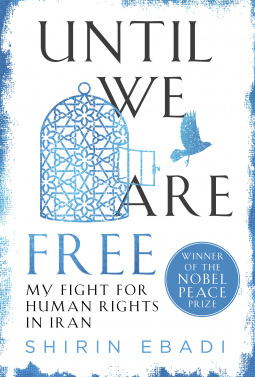
What at first feels like a collection of disconnected events
becomes a more linked memoir of Shirin Ebadi’s ongoing efforts for human rights,
and her life after receiving her well-deserved Nobel Peace Prize. Unable to
keep her judgeship in Iran, she was still able to practice law, and it is clear
from her interactions with anyone working against her that she excelled at
this. She knows very well how the system operates, having learned the hard way,
but this makes her stronger and better prepared to bring about justice. She is
a human like any of us, and includes the details she remembers from her home
country, the food, the sounds, the interiors of buildings where she worked, the
way people presented themselves. Even though she is exile, and the intelligence
ministry has done unthinkable things to try to stop her, she continues to work
for what is right.
I am a scientist and early career biologist. I am also an active reader, and am curious about almost everything. Of particular interest to me are natural histories and environmental conservation, though I also enjoy a lot of contemporary and classic fiction. I have an interest in Latin American and Spanish culture, and enjoy practicing Spanish by reading books in that language. In addition, I am a musician, and especially love jazz. @mattc3388 on Instagram
Tuesday, August 23, 2016
Wednesday, August 10, 2016
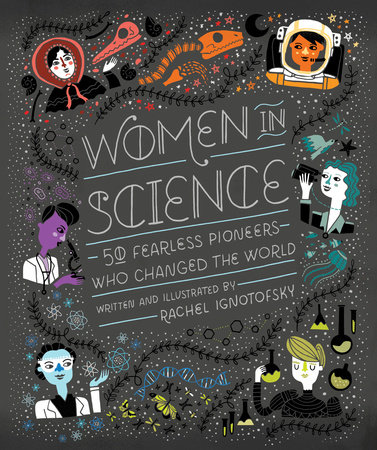
Women in Science
Very inspiring! is one way to describe “Women in Science,”
an awesome new book by Rachel Ignotofsky. Reading this reminded me why I wanted
to be a scientist in the first place. The excitement of discovery, defying the
status quo, and the positive impact of applying scientific findings to benefit communities.
Not only were these women brilliant scientists, they worked just as hard to
advance social causes, and to apply their findings to the betterment of
humanity.
Sunday, August 7, 2016
The Man Who Touched His Own Heart
“The Man Who Touched His Own Heart” is the kind of book so
good you’ll be re-telling some of these stories to your friends and family the
whole time you’re reading. It’s a good thing I’m not so squeamish anymore – and
a wonder I was a biology major – but after a few chapters, I found myself
adjusted and just absorbed in the fascinating complexity of the circulatory
system, and the adventurous history of how we came to understand what we now
know about it. Like the titular character (that was one story I had to share
multiple times), these are people who went into new territory at times when
doing so was unthinkable. Many of them used their own bodies when no other
options were available, and all sought, with a vision, a solution to a known
problem. The progress of medical knowledge had slow beginnings, with frustratingly
long gaps and setbacks, even the delayed inclusion of women and people of color
to contribute. Now this pace seems accelerated, where many of the discoveries
described in this book are commonplace, made into standard practice – where available,
as the author takes care to point out: the world is still not equitable.
Tuesday, July 19, 2016
Beaks, Bones, and Bird Songs
Birds are amazing, and not just because
of Roger Lederer’s (or my) bias. His new “Beaks, Bones, and Bird Songs” is a comprehensive
book about birds, not limited to the elements mentioned in its title. In
particular, he explains the evolved physical and behavioral characteristics of
these animals and why they’re important in the face of threats ranging from the
immediate to long-term. There is always a trade-off, a disadvantage for every
advantage. However, it’s not a totally bleak picture: how adaptable birds can
be comes up many times in many ways. Plus, there are many unknowns, meaning
more areas for future research, which can help inform conservation.
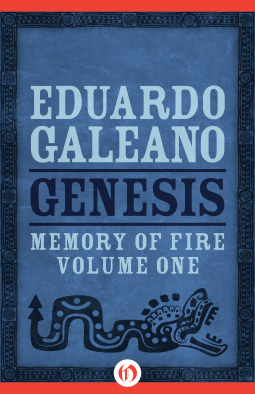
Genesis
In jazz, the Real Book is the standard book of standards,
where each song takes up one page, sometimes two. Here in “Genesis” Eduardo
Galeano follows a similar layout, but rather than sheet music for popular
songs, it is condensed history of the Americas. This is the first of three
volumes in his Memory of Fire trilogy. The first part of this volume is only
about a fifth of the whole. It begins with pre-Columbian myths, and with the history
that follows, is neither fiction nor nonfiction. 1492-1700 are the years, up to
the near-present by the end of the trilogy. Not everything happens in South
America nor is even limited to the Western hemisphere: certain momentous occasions
in Europe fit in the timeline as well. I found that if you only read one or two
of these one-page stories at a time, it is not easy to follow, and perhaps a
little too disconnected for one book. However, this is unlike anything I’ve
ever read, and for a serious student of Latin American history, Galeano’s work
is classic. Keep an eye out for these e-books, as they are sometimes on sale for significant discounts.
Friday, July 8, 2016
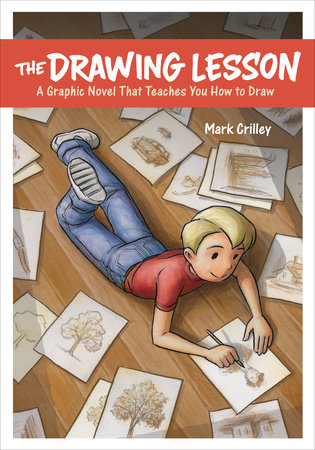
The Drawing Lesson
This is just what I needed. I read “The Drawing Lesson” in pretty
much one sitting and will be reading it again and again. I draw birds and stuff
– mostly birds. Like everyone else, I want to develop my own style, but I also
needed more info on some of the basics in visual art. For example, what author
Mark Crilley calls “negative space” (this is probably the common term in
professional art), which is like the pieces of the picture that don’t really
have interesting details yet hold the whole drawing together. One thing that
makes this such a helpful book is how it summarizes each lesson and builds upon
all previous lessons.
Monday, June 27, 2016
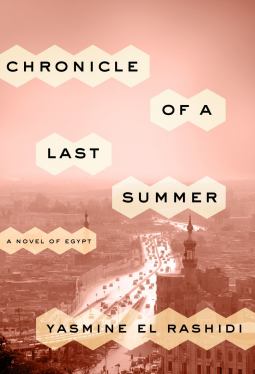
Chronicle of a Last Summer
“Chronicle of a Last Summer” stands out for its modern
structure. Rather than writing about what happens in the book, I can write what
is in the book, since events are secondary to periods of time. The narrator,
whose name never surfaces, lives in Cairo in a family house she describes as
being like a castle, in relative socioeconomic privilege. The house is
unchanged through all the nameless revolutions and power turnovers from one
dictator to the next, through all the family deaths and disappearances.
Saturday, June 25, 2016
Country Editor's Boy
What struck me most in “Country Editor’s Boy” was how much this memoir read like fiction, in style. Because Hal
Borland was a writer by profession, he might have had a tendency to notice and
remember more than his peers – or, he could have done supplementary research to
tell his own story, told somewhat removed, as if another person. Because
it's not fiction, it's not quite as interesting, but has the elements of any
coming-of-age story. Most notably owing to the dialogue, it doesn't feel like
the distant past, but breathes as if you stepped back in time and got to see
firsthand how things were in Flagler, Colorado, just about 100 years ago.
Written when he was an adult, he'd had the time to see the perspective he may
have lacked as a youngster.
Friday, June 17, 2016
Sweet As Cane, Salty As Tears
Thirty years after arriving as a 20-year-old in New York
City, time rushes back towards Katherine Fontenot. She tried to run from her
family in Louisiana, but if she loses her job, if her sister dies, what is she
going to do? Her younger sister, “the sane” one, gets gored by a rhinoceros,
which after escaping the zoo where Karen-Anne was looking after it, was shot
and killed. Much more than her work, the Fontenot family is the heart of this
book, and the family lore – the same stories that get told every time, but
still make people laugh – get told yet again, for the younger generations to
inherit. But more personally, about a third to half of “Sweet As Cane, Salty As Tears” is actually flashbacks, Katherine seeing something, hearing or smelling
or sensing, remembering what she left behind.
Sunday, June 12, 2016
A Buzz in the Meadow
Dave Goulson is a fine natural history writer, and an
important conservationist. His work centers around the less glorious taxa, the
insects that underlie the world’s ecosystems yet receive less attention. He has
a talent for expressing scientific results, when too often the findings are
confined to a bubble where only people specializing in a certain field will
read and understand the results. Books like “A Buzz in the Meadow” are needed
if you feel you don’t know enough about large groups of life forms like plants
and insects. However, if you don’t like thinking about insect parts and reproduction
(or that of animals in general), know that this is not for everyone. Still, Goulson
is a very good communicator, and this is an excellent book.
Subscribe to:
Posts (Atom)